
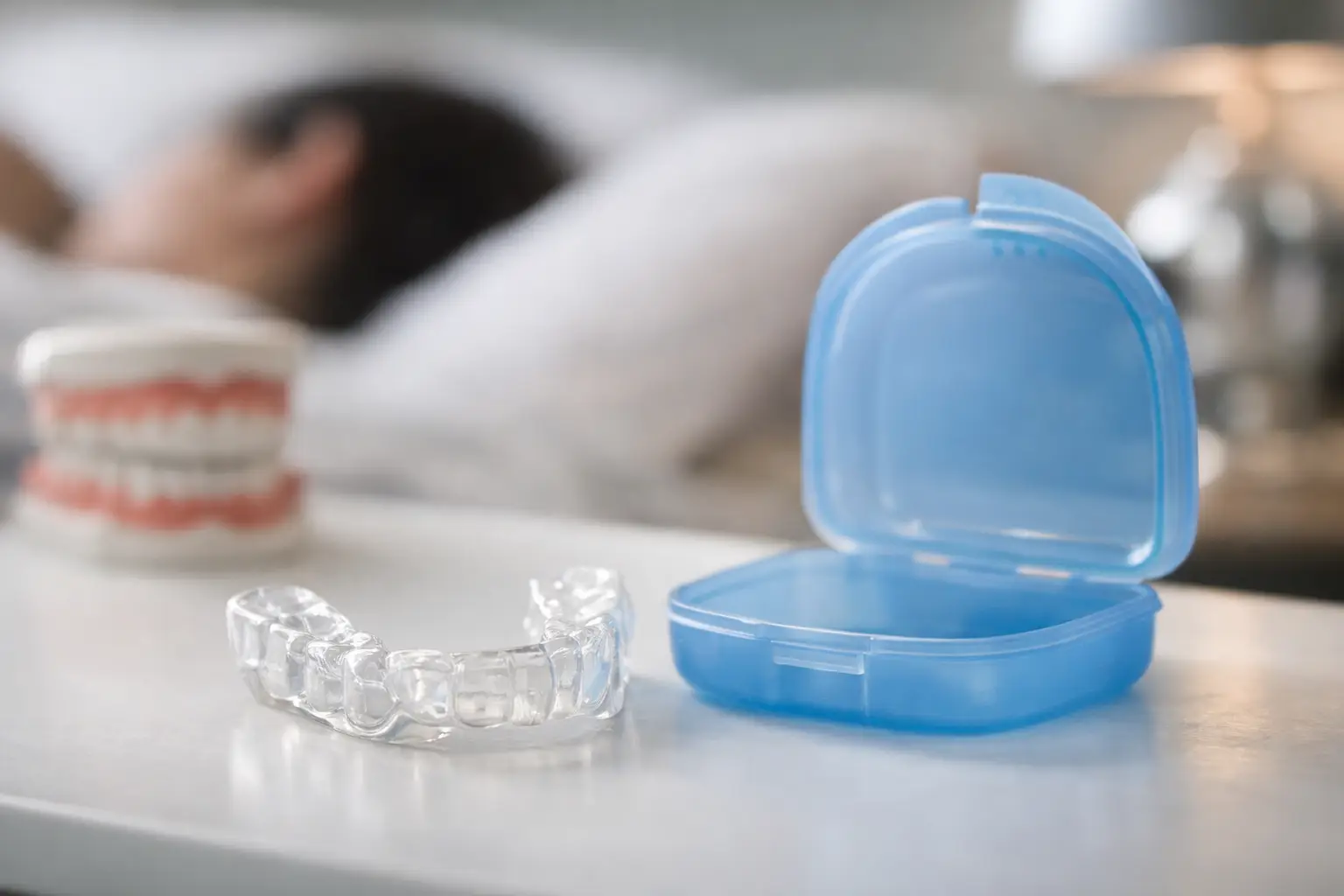
Waking up with a tight jaw, a dull headache, or teeth that feel oddly sensitive can be easy to dismiss at first. But those small signs often point to grinding or clenching during sleep, and a mouthguard for teeth grinding is one of the most common ways to help protect your smile from ongoing damage.
Why teeth grinding matters
Teeth grinding, also called bruxism, puts repeated force on the teeth, jaw joints, and surrounding muscles. Some people grind loudly at night. Others clench silently and do not realize it is happening until a partner mentions the sound, or a dentist spots the wear.
Over time, that pressure can flatten tooth surfaces, chip enamel, increase sensitivity, and strain the jaw. In some cases, patients also notice facial soreness, tension headaches, or discomfort near the ears. Not every person with bruxism will have severe symptoms, but when grinding becomes frequent, the effects tend to build gradually.
That is why early protection matters. A mouthguard does not always stop the habit itself, but it can create a protective barrier between the upper and lower teeth and help reduce the damage caused by nightly clenching and grinding.
How a mouthguard for teeth grinding works
A mouthguard for teeth grinding is designed to absorb and distribute biting forces more evenly. Instead of tooth against tooth, the pressure is directed into the guard. This can help limit wear on the enamel and reduce the risk of cracks or fractures.
For many patients, the benefit is not only about the teeth. A properly fitted guard may also lessen strain in the jaw muscles and make mornings feel more comfortable. That said, results vary. If grinding is linked to stress, sleep issues, bite changes, or jaw joint problems, a mouthguard may be one part of the solution rather than the whole answer.
The right approach depends on what is causing the symptoms, how severe the grinding is, and whether there is already visible damage to the teeth.
Store-bought vs custom mouthguards
Patients often ask whether an over-the-counter guard is good enough. The honest answer is: sometimes, but not always.
Store-bought options are widely available and can be helpful as a short-term step. They are usually less expensive upfront, which makes them appealing if you are just starting to address the problem. Some are boil-and-bite styles that soften in hot water and then mould to the teeth at home.
The trade-off is fit. A bulkier guard can feel awkward, shift during sleep, or encourage you to clench harder without realizing it. If the fit is uneven, it may also place pressure in ways that are not ideal for your bite or jaw.
A custom-made night guard is created from impressions or digital scans of your teeth. Because it is shaped specifically for your mouth, it is typically more comfortable, more secure, and better suited for consistent nightly use. For patients with moderate to heavy grinding, a custom guard is often the more reliable long-term option.
Signs you may need a custom guard
Not every person who clenches occasionally needs a custom appliance right away. But there are times when it makes sense to move beyond a pharmacy option.
If you are waking with regular jaw pain, noticing chipped or worn teeth, going through store-bought guards quickly, or avoiding your night guard because it feels uncomfortable, it is worth having the situation assessed. The same is true if you have dental work such as crowns, veneers, or fillings that need protection from excessive force.
Custom guards can also be especially helpful for people who want a more precise, conservative way to prevent damage before more complex treatment becomes necessary.
What a dentist looks for
When a dentist evaluates teeth grinding, the focus is not only on whether you grind. It is also on what that grinding is doing to your mouth.
Signs may include flattened biting edges, tiny fractures, gum recession made worse by pressure, tender jaw muscles, or changes in how the teeth come together. Sometimes the wear is obvious. In other cases, the first clues are sensitivity, muscle tension, or restorative work that keeps breaking down.
This is where personalized care matters. Two patients can both say, “I think I grind my teeth,” and still need very different recommendations. One may benefit from a simple protective guard. Another may need a closer look at jaw joint symptoms, sleep quality, bite alignment, or stress-related clenching patterns.
Will a mouthguard stop grinding?
This is a common question, and it helps to be clear. A mouthguard usually protects teeth from the effects of grinding, but it does not necessarily stop the habit itself.
For some patients, the presence of the guard reduces muscle activity or makes grinding less intense. For others, the main value is prevention. If stress is a major factor, lifestyle changes may also help. If symptoms point to a sleep-related issue, further assessment may be needed.
In other words, a mouthguard is often very effective, but its job is protection first. If your grinding is severe or your symptoms continue even with a guard, the next step is not to give up. It is to look more closely at the cause.
Comfort matters more than many people expect
A guard only helps if you can wear it consistently. That sounds obvious, but it is one of the biggest reasons treatment falls short.
If a mouthguard feels too thick, makes it hard to close your lips comfortably, causes gagging, or falls out overnight, patients naturally stop using it. That does not mean night guards do not work. It usually means the design is not right for that person.
A well-fitted custom guard should feel secure and smooth, without creating extra pressure points. There may be a short adjustment period, but it should not feel like a nightly battle. Comfort is part of effective treatment, not a bonus feature.
Caring for your night guard
Keeping a mouthguard clean is simple, but it does matter. Rinse it after each use, brush it gently with a soft toothbrush, and store it in a ventilated case. Heat can warp some materials, so it is best to keep it away from hot water or direct sunlight.
Regular dental visits are also useful because a guard can wear down over time, especially for heavy grinders. If it starts to feel different, looks cracked, or no longer fits properly, it should be checked. An old or damaged appliance may not offer the protection you think it does.
When not to wait
Some signs deserve attention sooner rather than later. If you have a broken tooth, sudden bite changes, jaw locking, persistent facial pain, or headaches that are becoming more frequent, do not assume a mouthguard alone will solve it.
Grinding can overlap with TMJ concerns, sleep disruption, or existing dental issues that need treatment. Protecting the teeth is important, but so is understanding the bigger picture. A careful exam can help determine whether you need a guard, an adjustment, restorative care, or a broader plan.
A practical next step for North Vancouver patients
If you suspect grinding, the most helpful first step is usually a dental exam rather than guessing which guard to buy. A clear assessment can show whether the problem is mild or more advanced, and whether a custom appliance is likely to be worth it for your comfort and long-term oral health.
At Victoria Park Dental, that conversation is meant to feel straightforward and supportive. The goal is not simply to hand you a device. It is to understand what your teeth and jaw are telling us, then recommend a solution that fits your needs.
Protecting your smile from grinding is often less complicated than repairing the damage later, and a well-made night guard can be a simple part of keeping your teeth strong for years to come.