
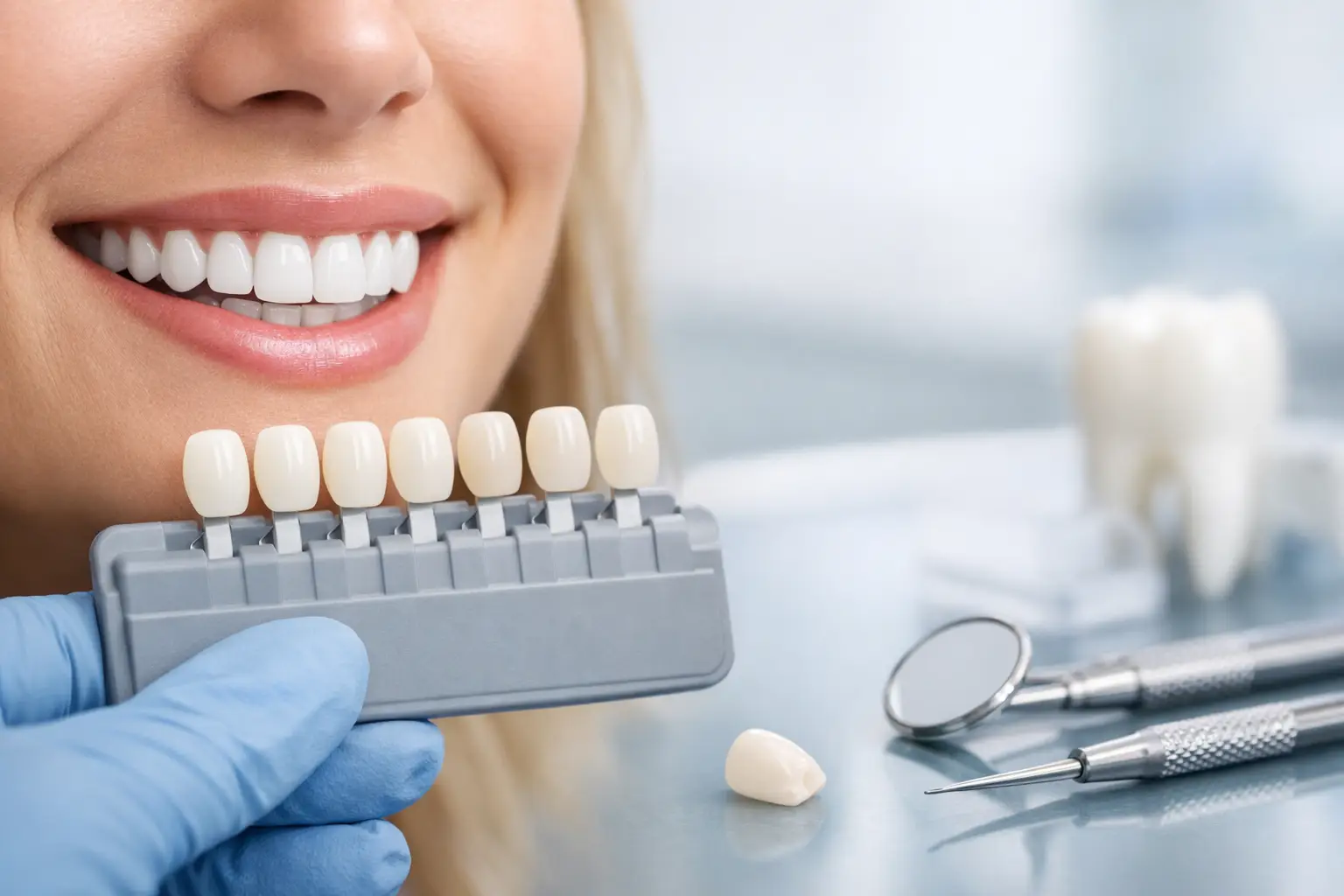
A veneer can change the appearance of a tooth that has always drawn your eye in photos: a darkened front tooth, a small chip, an uneven edge, or a gap that makes you hesitate to smile. A complete guide to dental veneers should begin with one reassuring point: veneers are not a one-size-fits-all cosmetic treatment. The best result is one that suits your facial features, bite, oral health, and goals while preserving as much healthy tooth structure as possible.
At Victoria Park Dental, cosmetic decisions are approached with your long-term oral health in mind. Veneers can be a beautiful option for the right patient, but a careful assessment helps ensure that the result feels comfortable, looks natural, and remains easier to maintain.
What are dental veneers?
Dental veneers are thin custom-made shells bonded to the front surfaces of teeth, usually the teeth visible when you smile. They can improve colour, shape, size, symmetry, and the appearance of minor spacing or wear. Rather than moving teeth or covering the entire tooth, a veneer changes the visible front surface.
Veneers are most often made from porcelain or composite resin. Both materials can create attractive results, but they differ in durability, appearance, preparation needs, cost, and maintenance. The right material depends on what needs to be corrected and how you use your teeth.
Veneers are primarily a cosmetic treatment, although improving a worn or chipped edge can also restore function. They are not a substitute for treating cavities, gum disease, active grinding, or bite concerns. Those issues need to be managed first to protect any cosmetic work.
Who may be a good candidate for veneers?
You may be a candidate if your teeth and gums are healthy and you would like to improve concerns such as persistent staining, small chips, uneven contours, minor gaps, slightly short teeth, or irregularly shaped teeth. Porcelain veneers can be especially helpful when whitening alone cannot improve internal tooth discolouration.
A consultation is essential because the same concern can have different solutions. For example, a gap may respond better to orthodontic treatment such as Invisalign, while a discoloured tooth might need whitening, bonding, a veneer, or a crown depending on the cause. If a tooth is significantly weakened, heavily filled, or has had root canal treatment, a crown may offer better protection than a veneer.
Your dentist will also assess your bite. People who clench or grind their teeth can still sometimes have veneers, but they may need to wear a nightguard and accept a higher risk of chipping or fracture. If your gums are inflamed or receding, addressing gum health first helps create a more stable and balanced-looking result.
Porcelain vs. composite veneers
Porcelain veneers
Porcelain is valued for its translucent, enamel-like appearance and its resistance to staining. A well-made porcelain veneer can reflect light in a way that looks very natural, particularly on front teeth. It is typically more durable than composite resin and may maintain its polish and colour longer with good care.
The trade-off is that porcelain veneers generally require more planning, laboratory work, and investment. In many cases, a small amount of enamel is reshaped to create room for the veneer. This preparation is conservative, but it is usually irreversible. Once a tooth has been prepared for a traditional veneer, it will generally need a veneer or another restoration in the future.
Composite veneers
Composite resin is a tooth-coloured material that can be shaped directly on the tooth. It often requires little or no removal of healthy enamel and may be completed in a single appointment, depending on the case. Composite can be a practical choice for small chips, shape adjustments, and minor gaps.
Composite is more likely to stain, lose shine, or chip over time than porcelain. It may need periodic polishing, repair, or replacement. Still, its conservative nature and lower initial cost make it a worthwhile option for many patients. The best choice is not automatically the most expensive one. It is the one that meets your goals while respecting your teeth and budget.
The complete guide to dental veneers: the treatment process
The process starts with a conversation. Your dentist will ask what you like and do not like about your smile, examine your teeth and gums, and review your bite. Photos, digital imaging, X-rays, or impressions may be used to plan treatment carefully. This is also the time to discuss shade. A natural smile usually includes subtle variation rather than an unnaturally uniform, bright white appearance.
If you are considering whitening, it is usually best to whiten before selecting the final veneer shade. Veneers do not respond to whitening products after they are placed, so the surrounding natural teeth should be at a colour you are happy to maintain.
For porcelain veneers, the tooth is typically prepared with a minimal amount of reshaping. An impression or digital scan is then used to create your custom veneer. A temporary veneer may be placed while the final restoration is made. At the fitting appointment, your dentist checks the colour, shape, fit, and bite before bonding the veneer securely to the tooth.
Composite veneers follow a different process. The tooth surface is prepared and the resin is layered, shaped, hardened, and polished during the appointment. Your dentist will check that the new shape feels comfortable when you bite, speak, and smile.
It is normal to need a short adjustment period. Your teeth should not feel painful after veneer placement, though mild sensitivity can occur following tooth preparation. Contact your dental team if you experience persistent pain, a bite that feels uneven, or a veneer that feels loose.
How long do veneers last?
Veneers are long-term restorations, not lifetime ones. Porcelain veneers often last 10 to 15 years or longer, while composite veneers may need attention sooner. Longevity varies widely based on the material, the condition of the underlying tooth, bite forces, oral hygiene, and daily habits.
Biting hard objects, chewing ice, opening packages with your teeth, and nail biting can chip or crack veneers. Grinding is another major concern. A custom nightguard can be a valuable investment if you clench or grind while sleeping.
A veneer may eventually need to be replaced because of wear, damage, recession around the gumline, changes to the tooth beneath it, or aesthetic preferences. Regular dental visits allow small concerns to be identified early, before they become more complex.
Caring for veneers and the teeth beneath them
Veneers do not decay, but the natural tooth and gum tissue around them still can. The same habits that protect natural teeth protect your cosmetic investment: brush twice daily with a soft-bristled toothbrush, clean between your teeth every day, and attend regular checkups and hygiene appointments.
Use a non-abrasive toothpaste. Highly abrasive whitening toothpaste can gradually dull the polished surface of composite and may be unnecessarily harsh around veneer margins. If you enjoy coffee, tea, red wine, or richly coloured foods, porcelain is relatively stain resistant, but composite may absorb surface stains over time.
Be mindful of how you use your front teeth. They are designed for biting food, not for cutting fishing line, holding pens, or tearing tape. If you play contact sports, wear a properly fitted mouthguard.
Costs and questions to ask before treatment
The cost of veneers varies with the number of teeth being treated, the material selected, the complexity of the case, and whether additional dental care is needed first. Cosmetic veneer treatment is often not covered by dental insurance, though coverage depends on your individual plan and the reason for treatment.
Before moving forward, ask about the expected lifespan, whether enamel needs to be removed, the likely maintenance needs, what happens if a veneer chips, and whether alternatives could achieve your goal. You should also feel comfortable discussing how many teeth need treatment. Some patients benefit from one or two veneers, while others choose several teeth to create a more balanced smile. More is not always better.
A thoughtful veneer plan should leave you feeling informed, not rushed. When your teeth, gums, bite, and personal goals are all considered together, cosmetic dentistry can support a smile that looks like you on your best day – healthy, comfortable, and confidently your own.