
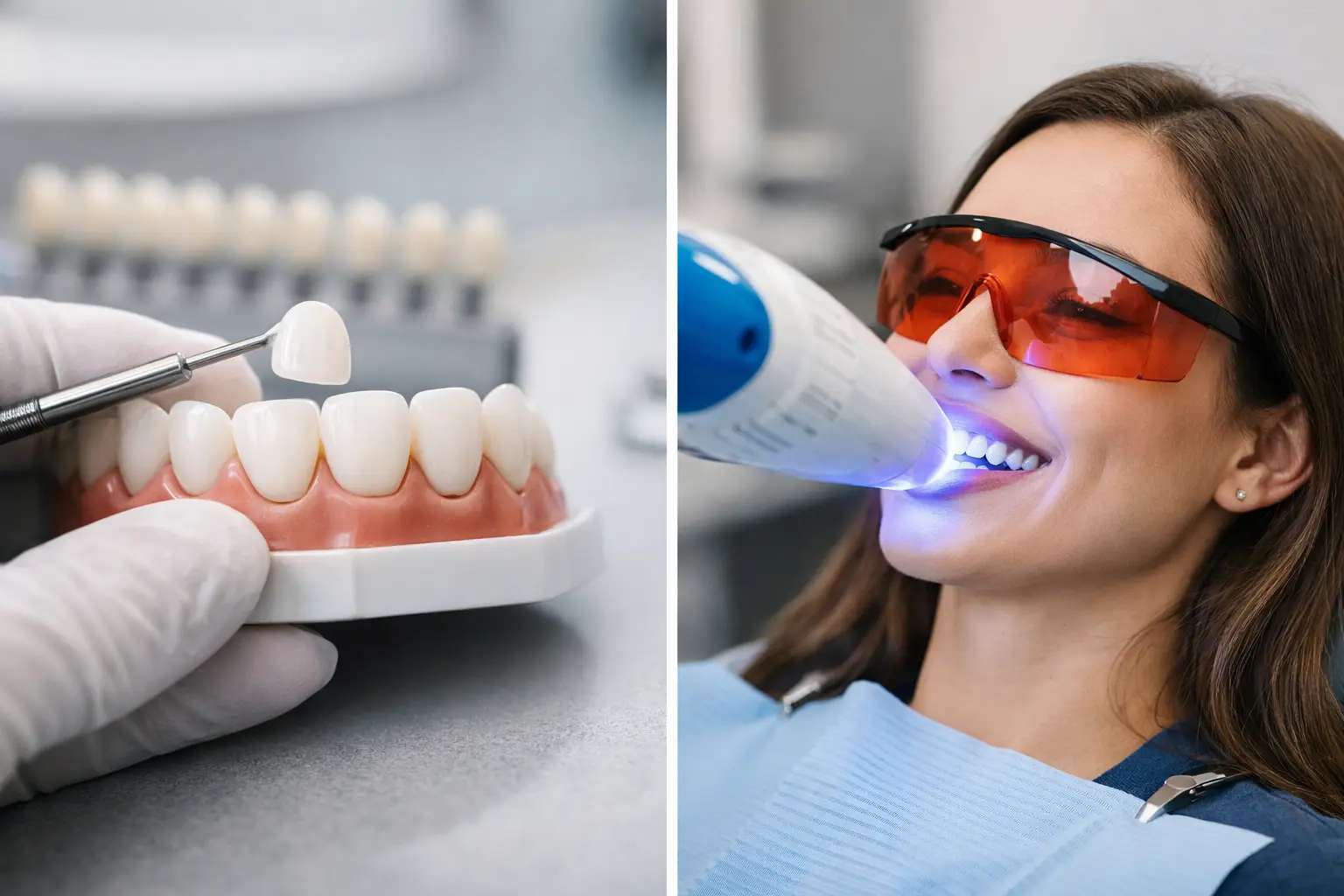
A brighter smile can make a meaningful difference when you see yourself in photos, speak at work, or simply look in the mirror. But when comparing veneers vs whitening, the right choice is rarely just about achieving the whitest possible shade. It is about understanding what is causing the changes in your smile, what you would like to improve, and which treatment supports your oral health over the long term.
Teeth whitening and veneers can both create a more confident-looking smile, but they solve different concerns. One works with your natural enamel to lift stains. The other changes the visible front surface of selected teeth. A thoughtful conversation and examination can help you choose a result that feels natural, comfortable, and personal to you.
Veneers vs Whitening: The Essential Difference
Professional teeth whitening lightens the colour of natural tooth enamel. It is often a good choice for people whose teeth have become darker or more yellow over time because of coffee, tea, red wine, tobacco, certain medications, or the natural changes that occur with age.
Veneers are thin, custom-made shells that are bonded to the front of teeth. They can improve colour, but they can also change shape, size, symmetry, and the appearance of small gaps or surface imperfections. Porcelain veneers are commonly chosen for their lifelike translucency and resistance to staining.
The simplest way to think about the choice is this: whitening changes the colour of healthy natural teeth, while veneers can change both colour and form. If colour is your only concern, whitening may be the more conservative place to begin. If several cosmetic details are affecting your confidence, veneers may offer a more complete solution.
When Teeth Whitening May Be the Right Fit
Whitening is well suited to a smile that is healthy, well aligned, and generally pleasing in shape, but looks dull or stained. It can be a practical option before a wedding, milestone event, professional photos, or whenever you would like a refreshed appearance without altering the structure of your teeth.
Professional whitening is more predictable and safer than relying on unmonitored products. Your dental team can assess the current shade of your teeth, discuss realistic results, and ensure the treatment is appropriate for your enamel and gums. Some people notice temporary tooth sensitivity during or after whitening, especially if they already have sensitive teeth. This usually settles, and the treatment approach can often be adjusted to make the process more comfortable.
Whitening results are not permanent. The shade can gradually deepen again, particularly with frequent exposure to deeply coloured foods and drinks. Good brushing and flossing habits, regular hygiene visits, and occasional touch-ups can help maintain the result. For many patients, that ongoing maintenance is a worthwhile trade-off for a conservative treatment that preserves their natural teeth.
There is one key limitation: whitening does not lighten crowns, fillings, bonding, or veneers. If you have a visible restoration on a front tooth, whitening the surrounding teeth can create a colour mismatch. In that case, your dentist may recommend whitening first and then replacing an older restoration to match the new shade, if replacement is clinically appropriate.
Whitening works best for surface and age-related colour changes
Not all discolouration responds equally. Yellow-toned teeth often lighten well, while grey, blue-grey, or internally stained teeth may respond less predictably. A tooth that has darkened after trauma or root canal treatment may need a different approach. An examination helps identify the source of the colour change rather than assuming every dark tooth needs the same treatment.
When Veneers May Be Worth Considering
Veneers are often considered when colour is only one part of the concern. For example, you may have teeth that are naturally small, unevenly shaped, chipped, worn, slightly spaced, or resistant to whitening. Veneers can be designed to create a more balanced appearance while still respecting the proportions of your face and smile.
A well-planned veneer should not look oversized, overly opaque, or unnaturally uniform. The goal is not a copy-and-paste smile. It is a smile that complements your facial features, reflects your preferences, and still looks like you.
Porcelain veneers are durable, but they are not maintenance-free. They require the same daily care as natural teeth: thorough brushing, flossing, and regular dental visits. Although porcelain resists stains very well, the tooth and gum tissues around the veneer still need ongoing attention. Grinding or clenching can also place extra pressure on veneers, so a protective night guard may be recommended for some patients.
Veneer treatment is a more permanent decision than whitening. In many cases, a small amount of enamel must be reshaped to make room for the veneer and achieve a natural fit. The amount varies by case, and conservative planning matters, but once a tooth has been prepared for a conventional veneer, it will usually need a veneer or another restoration in the future. That is why veneers are best chosen with a clear understanding of the commitment involved.
Veneers are not a shortcut around dental health
Before cosmetic treatment, your gums and teeth need to be stable. Active decay, gum inflammation, untreated bite issues, or habits such as clenching should be addressed first. A beautiful result depends on a healthy foundation.
This is also why veneers are not always the first recommendation for a minor concern. Small chips or uneven edges may sometimes be improved with conservative bonding. Orthodontic treatment may be a better option when tooth position is the main issue. The most appropriate plan is not necessarily the most extensive one.
Comparing Appearance, Longevity, and Maintenance
Whitening and veneers differ in the way they age. Whitening brightens the enamel you already have, and its results can be refreshed over time. Veneers hold their colour well, but they may eventually need replacement because of wear, changes at the gumline, chipping, or the natural lifespan of the material.
The appearance also differs. Whitening preserves the texture, shape, and character of your natural teeth. Veneers give more control over the final look, including colour consistency across teeth that may have different shades or internal staining. That control is valuable for the right case, but it comes with greater cost, more planning, and a longer-term restorative commitment.
Neither option should be chosen based on a single photo or a trend. Very bright shades can look striking on a screen but may not suit every complexion, age, or smile. A natural-looking shade that works with the whites of your eyes and the tone of your skin often creates the most confident result.
How to Decide Between Veneers and Whitening
Start by identifying what you would change if you could be specific. If your answer is simply, “I wish my teeth were brighter,” whitening may be the sensible first step. If you are also concerned about chips, spacing, shape, worn edges, or teeth that do not respond to whitening, veneers may deserve a conversation.
It can also be helpful to consider your comfort with maintenance and future care. Whitening involves periodic touch-ups, while veneers involve a long-term commitment to maintaining restorations. Budget matters as well, but it is best discussed alongside durability, the condition of your teeth, and the scope of the changes you want to make.
At Victoria Park Dental, cosmetic recommendations are approached with the same care as any other treatment plan: by listening first, examining the health of your teeth and gums, and explaining the options clearly. Sometimes the best path is whitening. Sometimes it is veneers. Often, a staged plan that begins with the most conservative option provides the clearest answer.
A Smile Plan Should Feel Like Your Own
The best cosmetic dentistry does more than make teeth look lighter or more even. It helps you smile without second-guessing yourself, while protecting the healthy tooth structure and gum health that support that confidence. A personalized assessment can give you a realistic view of what whitening or veneers can achieve, with no pressure to choose more treatment than you need.
If you have been weighing veneers vs whitening, bring your questions to your next dental visit. A careful conversation can turn a general wish for a brighter smile into a plan that feels comfortable, healthy, and genuinely right for you.