
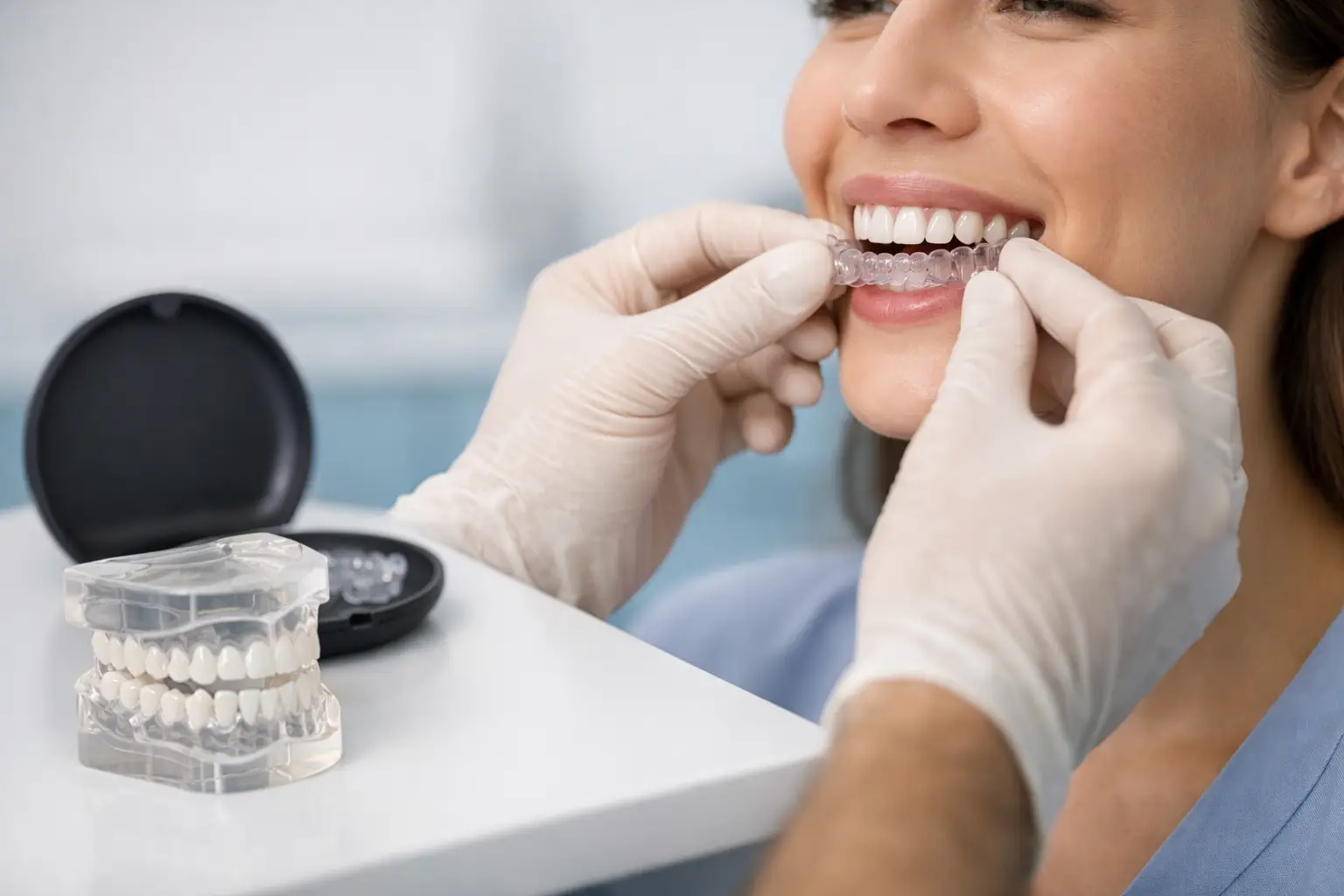
A lot of adults ask the same question before they commit to clear aligners: how invisalign treatment works when there are no brackets or wires in sight. The short answer is that Invisalign uses a series of custom-made clear aligners to move teeth gradually, in small planned steps. The longer answer matters, because the success of treatment depends on careful planning, healthy teeth and gums, and wearing the aligners as directed.
For many patients, the appeal is obvious. Invisalign is discreet, removable, and generally easier to fit into daily life than traditional braces. But it is still orthodontic treatment. Teeth do not move just because a tray is placed over them. They move because each aligner is designed to apply controlled pressure to specific teeth at specific times.
How invisalign treatment works from the first visit
Treatment starts with an assessment to see whether Invisalign is a good fit for your smile goals and oral health. That first appointment is not just about whether your teeth look crowded or crooked. Your dentist also checks the health of your gums, looks for cavities or worn restorations, and evaluates your bite.
This step is important because clear aligners work best on a healthy foundation. If there is active gum disease, untreated decay, or another issue affecting the teeth and supporting bone, those concerns usually need attention first. Straightening teeth is part of long-term oral health, but it should not come ahead of the basics.
If you are a good candidate, digital scans or impressions are used to create a detailed model of your teeth. Modern digital scanning is more comfortable than many patients expect, and it allows your dentist to plan tooth movement with impressive precision. From there, a customized treatment plan maps out how each tooth is expected to move over time.
The science behind tooth movement
Teeth are held in place by bone and ligaments, not cemented permanently into the jaw. That is what makes orthodontic movement possible. When gentle, sustained force is applied to a tooth, the body responds by remodelling the bone around it. Bone is resorbed on one side and rebuilt on the other, allowing the tooth to shift gradually.
Invisalign aligners are designed to create that force in a controlled way. Each set is slightly different from the one before it. As you progress through the series, your teeth move step by step toward their planned positions.
This is also why treatment cannot be rushed. Teeth need time to respond safely. Moving too quickly can increase discomfort and may compromise results. A well-planned timeline respects biology, not just convenience.
Why each aligner is different
Every aligner in the series represents a small stage of movement. You usually wear each set for about one to two weeks, depending on your treatment plan. If all goes well, you then switch to the next set and continue the process.
The changes between trays can be subtle to the eye, but they are meaningful. One aligner may focus on rotating a tooth slightly, while the next may help level the bite or create room for another tooth to shift. Small movements add up over months.
What the aligners actually do day to day
Once your aligners are ready, you will be shown how to insert and remove them properly. They need to be worn for most of the day, typically 20 to 22 hours. That means they should only come out for eating, drinking anything other than water, brushing, and flossing.
This is one of the biggest differences between Invisalign and braces. Because the aligners are removable, they offer more flexibility. You can eat the foods you normally enjoy, and brushing and flossing are much simpler. But that flexibility comes with responsibility. If the aligners are not worn enough, teeth may not track as planned.
Tracking means your teeth are moving in line with the treatment plan. If trays start to feel very tight for too long, or a gap appears between the aligner and the teeth, it can be a sign that movement is falling behind. In those cases, your dentist may need to adjust the plan.
Attachments, buttons, and small refinements
Some patients are surprised to learn that Invisalign treatment may involve small tooth-coloured attachments bonded to certain teeth. These are tiny shapes that help the aligners grip more effectively and create more precise movement. They are much less noticeable than braces, but they play an important role in many cases.
Depending on your bite, elastics may also be recommended. These can help correct how the upper and lower teeth fit together. In some situations, small amounts of enamel reshaping between teeth may be done to create room for alignment. This sounds more dramatic than it is. When appropriate, it is minimal, carefully planned, and can help avoid more invasive treatment.
These details are a good reminder that Invisalign is not just a set of plastic trays. It is a complete treatment system that can be tailored to fairly simple or more involved orthodontic needs.
What Invisalign can treat and where it has limits
Invisalign can often help with crowding, spacing, mild to moderate bite concerns, and teeth that have shifted over time. Many adults choose it after noticing relapse from not wearing retainers years ago. It can also be a strong option for teens and adults who want a lower-profile alternative to braces.
That said, not every case is ideal for clear aligners. Some more complex bite issues or severe tooth movements may be better managed with braces, or with a combination approach. This is where a personalized assessment matters. The best treatment is not the one that sounds most convenient. It is the one that gives you a healthy, stable result.
A thoughtful dentist will explain the trade-offs clearly. Invisalign may suit your goals beautifully, or another option may be more predictable. Either way, you should understand why.
How long treatment usually takes
Treatment time varies. Some patients finish in as little as six months, while others need 12 to 18 months or longer. The timeline depends on how much movement is needed, how consistently the aligners are worn, and how well the teeth respond.
Compliance makes a real difference. Wearing aligners for 12 hours a day instead of 22 will not just slow things down a little. It can affect whether the treatment works as planned at all. The removable nature of Invisalign is a benefit, but it also means the patient is part of the treatment team.
Regular check-ins are still important, even though there are no wires to tighten. These visits allow your dentist to monitor progress, make adjustments if needed, and ensure your teeth and gums remain healthy throughout treatment. At a practice like Victoria Park Dental, this kind of ongoing monitoring fits naturally into a preventive, personalized approach to care.
Living with Invisalign
Most patients adjust quickly, but there is an initial learning curve. A new tray may feel snug for the first day or two, and some people notice a mild pressure sensation. That pressure is usually a sign the aligner is doing its job.
You may also notice a temporary change in speech when you first start wearing aligners. A slight lisp is not uncommon, but it often improves within a few days as your tongue adapts. Keeping the aligners clean is part of the routine too. They should be rinsed and brushed gently, and your teeth should be cleaned before putting them back in.
One of the more practical benefits is that Invisalign can make oral hygiene easier than braces. Since the trays come out, it is easier to brush thoroughly and floss normally. For many adults, that convenience is a major reason to choose clear aligners.
What happens after the last aligner
Finishing active treatment is a milestone, but it is not the end of the process. Teeth have a natural tendency to shift, especially in the first period after movement. That is why retainers matter.
Most patients will need to wear retainers regularly to protect their result. The schedule may be full-time at first and then transition to nights, depending on your case. Skipping retainers is one of the most common reasons teeth drift back.
If you are investing time in straightening your smile, retention is what helps that investment last. It is a simple step, but an essential one.
Understanding how invisalign treatment works can make the whole process feel more manageable. It is not magic, and it is not one-size-fits-all. It is a carefully planned way to move teeth gradually, comfortably, and with a clear view of the goal. For patients who want a straighter smile with a modern, low-profile option, it can be an excellent choice when the plan is personalized and the follow-through is consistent.