
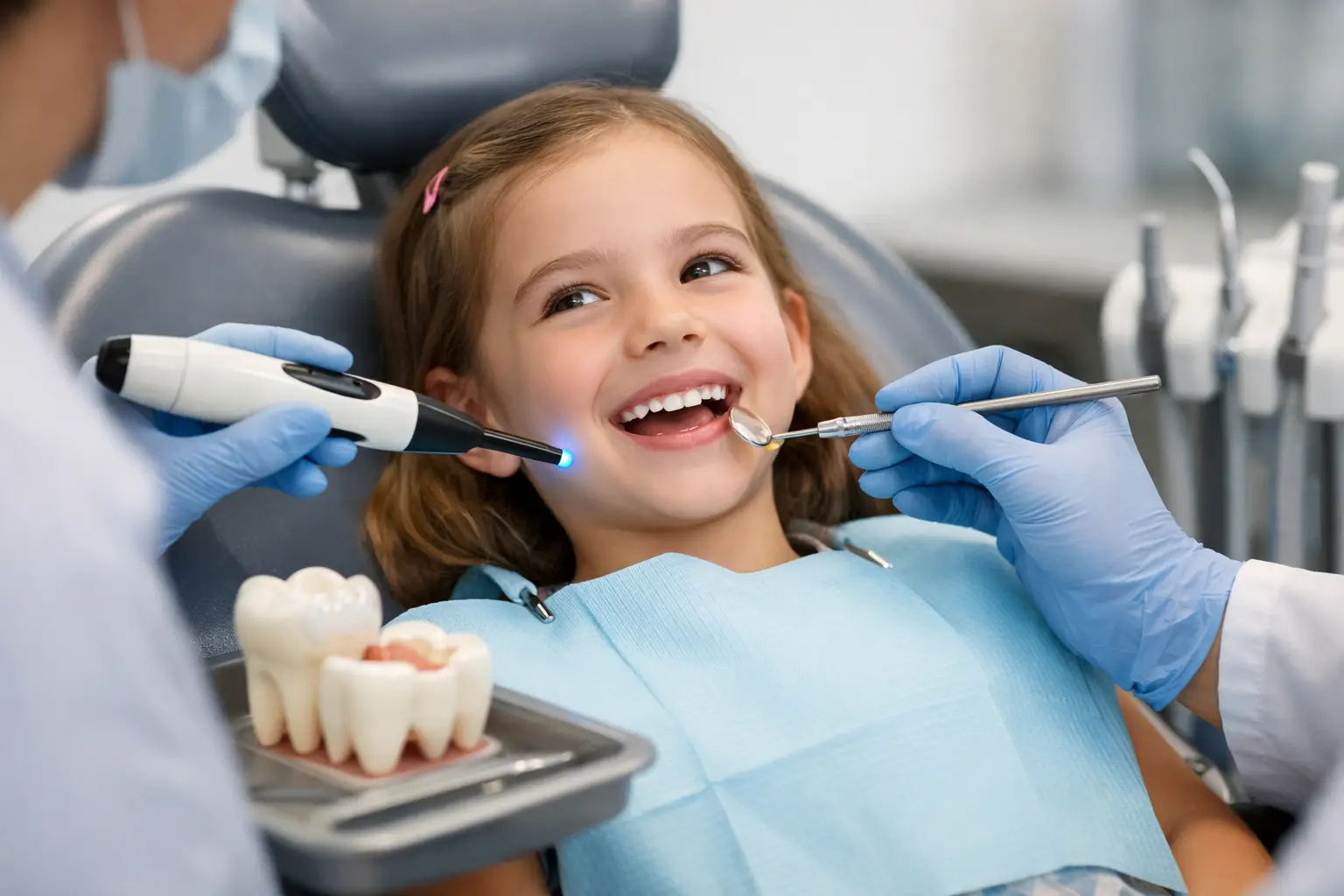
A child’s first permanent molars often arrive quietly, usually around age six. They sit far back in the mouth, where brushing can be awkward and their newly erupted chewing surfaces have deep grooves that readily hold food and plaque. That is why dental sealants for children can be such a practical preventive option: they protect the parts of teeth where cavities commonly begin before a problem has the chance to grow.
For many North Vancouver families, sealants are a simple addition to regular checkups and cleanings. They are not a substitute for brushing, flossing, fluoride, or a balanced diet. Instead, they provide another layer of protection for teeth that can be difficult for young children to clean thoroughly on their own.
What are dental sealants?
A dental sealant is a thin protective coating applied to the chewing surface of a back tooth, most often a permanent molar or premolar. Once it has set, it acts as a barrier over the small pits and fissures in the enamel. These grooves can be narrower than a toothbrush bristle, which means even a child who brushes carefully may not be able to clean them fully.
Sealants are usually clear, white, or slightly tinted. They are designed to blend into the tooth and are not noticeable when your child smiles or speaks. The goal is straightforward: keep bacteria and food particles out of vulnerable grooves so decay is less likely to develop there.
While permanent molars are the most common candidates, some children may also benefit from sealants on baby molars. This depends on their cavity history, the shape of their teeth, their brushing habits, and the dentist’s assessment of their individual risk.
Why back teeth need extra protection
Molars do most of the heavy chewing, and their textured surfaces are useful for breaking down food. Unfortunately, those same ridges and grooves can create ideal hiding places for plaque. Newly erupted molars may sit lower than surrounding teeth for a time, making them harder to reach with a toothbrush as well.
Children are still learning the coordination and consistency needed for effective brushing. Even with a parent’s help, the very back teeth can be missed. A sealant makes the chewing surface smoother and easier to keep clean, reducing the chance that trapped plaque will lead to a cavity.
This matters because a small cavity is rarely just a small issue forever. If decay progresses, a child may eventually need a filling or more involved treatment. Preventive care aims to preserve as much healthy tooth structure as possible, while keeping dental visits comfortable and positive.
When should children get sealants?
Timing matters. Sealants are most helpful when a tooth has fully erupted enough to be kept dry during the appointment, but before decay has started in its grooves. The first permanent molars commonly emerge around ages six to seven. Second permanent molars often come in around ages 11 to 13.
A dentist will check these teeth at routine visits and let you know when they are ready for sealants. There is no need to rush before the teeth are accessible, and no benefit in placing a sealant over a tooth that already needs a filling. If early changes in the enamel are present but there is no actual cavity, a dentist may discuss whether a sealant is appropriate as part of a conservative preventive plan.
Children who have had cavities before, snack frequently on sugary or sticky foods, have deep grooves in their molars, or find brushing difficult may be especially good candidates. But sealants are not only for children considered high risk. Many families choose them because they offer sensible protection during the cavity-prone years.
What happens during a sealant appointment?
The process is quick, gentle, and usually does not require freezing or drilling. For most children, it feels much like having a tooth cleaned.
First, the tooth is cleaned and dried. The dental team then applies a conditioning solution that helps the sealant bond securely to the enamel. After rinsing and drying the tooth again, the liquid sealant is painted into the grooves. A special curing light hardens it in seconds, and the dentist checks your child’s bite to make sure everything feels natural.
The tooth must stay dry while the sealant is applied, so cooperation helps. Younger children who are new to dental visits may need a little extra coaching and reassurance. A caring team can explain each step in child-friendly language, offer breaks when needed, and help the visit feel manageable rather than intimidating.
Are dental sealants safe?
Dental sealants have been used in preventive dentistry for decades and are widely considered safe. The materials used in modern dentistry are carefully selected for their intended purpose and applied in very small amounts directly to the tooth surface.
Parents sometimes ask about bisphenol A, or BPA, because some dental resin materials may contain trace related compounds. Research and professional guidance support the safety of sealants, particularly given their preventive value. Dental teams also follow application techniques that minimize unnecessary exposure, such as thoroughly rinsing and cleaning the treated tooth after placement.
If you have questions about the material being used, ask. Your child’s dental team should be happy to explain the treatment, discuss alternatives, and help you make a decision that feels right for your family.
How long do sealants last?
Sealants can protect teeth for several years, but they are not permanent. They may gradually wear down, chip, or partially come away, especially on teeth exposed to strong chewing forces. This does not mean the treatment has failed. It simply means the tooth should be checked and, if needed, repaired or replaced.
Regular dental examinations are essential because the dentist can inspect sealants along with the rest of your child’s teeth. A sealant that is intact can continue to do its job. If an edge has worn away, it is often easy to touch up.
A sealant also does not make a tooth immune to cavities. Decay can still occur between teeth or around areas that are not covered. Daily home care and routine professional care remain the foundation of a healthy smile.
Sealants, fluoride, and brushing work together
It is easy to think of preventive care as choosing one solution, but children’s oral health works best when several small habits support one another. Fluoride strengthens enamel and can help reverse very early mineral loss. Brushing twice daily with a fluoridated toothpaste removes plaque from accessible surfaces. Flossing cleans between teeth where a toothbrush cannot reach. Sealants protect the grooves on the biting surfaces of selected back teeth.
Food and drink choices matter too. Frequent sipping on sweet drinks or regular grazing on sugary snacks gives mouth bacteria more opportunities to produce acid. A family does not need perfection to support healthy teeth, but consistent routines make a meaningful difference. Water between meals, regular brushing, and dental visits that fit your child’s needs are a strong place to start.
Are sealants covered by dental benefits?
Coverage varies by plan, your child’s age, the teeth being treated, and the frequency rules set by the insurer. Some extended dental plans cover sealants fully or partially, while others may limit coverage to permanent molars or a specific time period. Public dental programs may have their own eligibility and coverage requirements.
Before treatment, it can be helpful to review your benefits or ask the dental office to help clarify the estimate and available options. Cost is one consideration, but so is the value of preventing a cavity that could require more treatment later.
A personalized decision for your child
Not every tooth needs a sealant, and not every child has the same cavity risk. At Victoria Park Dental, the conversation begins with your child’s oral health, the shape and eruption stage of their teeth, their home-care routine, and their comfort level in the dental chair. The recommendation should feel clear, never pressured.
The best time to protect a newly erupted molar is often before it causes any trouble. At your child’s next checkup, a simple look at those back teeth can help you decide whether sealants are a worthwhile step toward keeping their growing smile healthy and confident.