
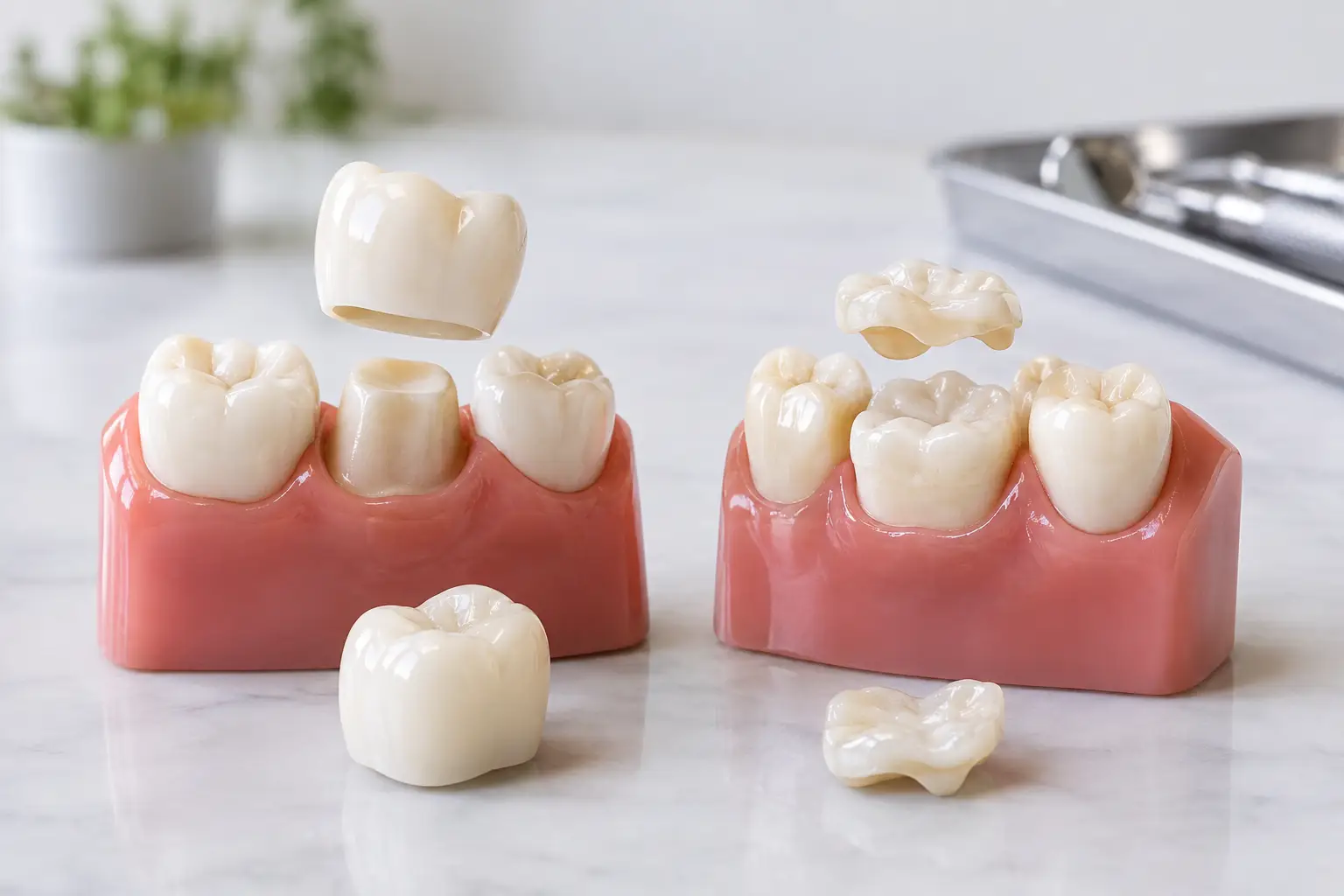
A tooth with a large filling, crack, or area of decay may need more support than another filling can provide. The crown vs onlay decision is not about choosing the “better” restoration in every case. It is about preserving as much healthy tooth structure as possible while giving the tooth the strength it needs to function comfortably for years to come.
Both crowns and onlays are custom restorations used to repair damaged teeth. They can restore chewing ability, protect vulnerable areas, and improve the appearance of a tooth. The right option depends on how much healthy tooth remains, where the damage is located, your bite, and the long-term demands placed on that tooth.
Crown vs Onlay: The Main Difference
A dental crown covers the entire visible portion of a tooth above the gumline. It is sometimes called a cap because it fits over the tooth after the tooth has been carefully shaped to make room for the restoration. Crowns are commonly recommended when a tooth is significantly weakened, heavily restored, cracked, or has had root canal treatment.
An onlay covers only the damaged part of the tooth, including one or more chewing cusps, which are the raised points on the biting surface of back teeth. Unlike a smaller filling, an onlay is made outside the mouth or designed digitally, then bonded precisely to the prepared tooth. It is often a conservative option when the damage is too extensive for a filling but enough healthy tooth structure remains that a full crown is not necessary.
Think of an onlay as targeted reinforcement. A crown provides more complete coverage. Neither is automatically the right answer – the condition of the individual tooth guides the decision.
When a Crown May Be Recommended
A crown can be an excellent choice when a tooth needs full protection. For example, a tooth may have a very large old filling with thin remaining walls, a fracture that places the tooth at risk of breaking further, or extensive decay that has weakened its overall structure. A crown may also be recommended after root canal therapy, particularly for back teeth that absorb significant chewing pressure.
Because a crown surrounds the tooth, it can help hold the remaining structure together and distribute bite forces more evenly. This can be especially valuable if you clench or grind your teeth, have a strong bite, or the tooth is already missing substantial material.
The trade-off is that a crown usually requires more reshaping of the natural tooth than an onlay. When full coverage is needed, that preparation is worthwhile because it creates room for a durable restoration and helps prevent future fracture. When healthy enamel can safely be preserved, however, a more conservative approach may be preferable.
When an Onlay May Be Recommended
An onlay may be a good fit when damage is limited to part of a tooth, but a standard filling would not provide enough support. This often occurs in molars and premolars, where old fillings can become worn, leak around the edges, or leave the cusps vulnerable to cracking.
By replacing the damaged area while preserving sound portions of the tooth, an onlay can offer a strong, natural-looking repair with less removal of healthy structure. Modern ceramic onlays are colour-matched to blend with your smile and are carefully bonded to the tooth for a close fit.
Onlays are not suitable for every situation. If decay extends too far around the tooth, the walls are severely weakened, or a crack runs in a way that requires full coverage, a crown may offer more predictable protection. Your dentist will assess this through an examination, X-rays where appropriate, and a close look at the tooth’s bite and existing restorations.
Why Preserving Tooth Structure Matters
Natural enamel is remarkably strong. Whenever possible, conservative dentistry aims to retain healthy enamel and dentin rather than remove it unnecessarily. This is one reason an onlay can be appealing for the right tooth.
At the same time, conserving tooth structure should never mean under-treating a weakened tooth. A restoration needs to match the risk. Placing an onlay on a tooth that truly needs a crown may leave it prone to fracture. Placing a crown where an onlay would have been sufficient may remove more tooth structure than needed.
This balance is where personalized planning matters. The goal is not simply to repair what is visible today. It is to choose a restoration that supports your oral health, comfort, and function over the long term.
Materials and Appearance
Crowns and onlays can be made from several materials, including ceramic, porcelain, metal, or combinations of materials. For many patients, tooth-coloured ceramic is a popular option because it can look natural and withstand normal chewing forces when properly selected and cared for.
The best material depends on the location of the tooth, the amount of space available, your bite, and cosmetic priorities. A front tooth may call for a different approach than a back molar. Patients who grind their teeth may also need a treatment plan that considers the added pressure on any restoration.
At Victoria Park Dental, advanced digital technology, including CEREC same-day restorations in suitable cases, can make the process more convenient. Whether a same-day option is appropriate depends on the tooth, restoration design, and your individual treatment needs.
What the Treatment Process Feels Like
Both crown and onlay treatment begin with a careful diagnosis and discussion of your options. Once a plan is confirmed, the tooth is gently numbed and prepared by removing decay, old filling material, or damaged areas. The dentist then shapes the tooth so the restoration can fit securely and comfortably.
With traditional treatment, impressions or digital scans are used to create the restoration. You may wear a temporary restoration while the final crown or onlay is made. In some cases, digital dentistry allows the final ceramic restoration to be designed, created, and placed in a single appointment.
At the final visit, or later that same day when appropriate, the restoration is checked for fit, colour, and bite. Small adjustments help ensure your teeth come together naturally. Most patients can return to normal routines quickly, though it is wise to avoid chewing on anything unusually hard until numbness has worn off.
How Long Do Crowns and Onlays Last?
With good care, both crowns and onlays can last many years. Their lifespan depends on the material, the size and location of the restoration, bite forces, home care, diet, and regular dental visits. A restoration is durable, but it is not indestructible. Chewing ice, biting hard objects, untreated grinding, and recurrent decay around the margins can shorten its life.
Brushing twice daily with fluoride toothpaste, cleaning between your teeth every day, and attending regular checkups are practical ways to protect your restoration and the tooth underneath it. If you clench or grind at night, a custom night guard may be recommended to reduce excess pressure.
Questions to Ask Before You Decide
It is reasonable to want a clear explanation before proceeding with restorative treatment. Ask how much healthy tooth structure remains, why a filling is no longer enough, and what could happen if treatment is delayed. You can also ask why a crown or onlay is being recommended specifically for your tooth, what material is proposed, and whether a night guard would help protect the result.
A good treatment conversation should leave you feeling informed, not rushed. Dental care works best when you understand the purpose of the treatment and feel comfortable with the plan.
If you have a tooth that feels sensitive when chewing, has a broken filling, or has been identified as cracked during a checkup, arranging an assessment sooner can help prevent a smaller concern from becoming a more complex repair. The right restoration should feel like a natural part of your smile: comfortable, strong, and designed around the health of your tooth.