
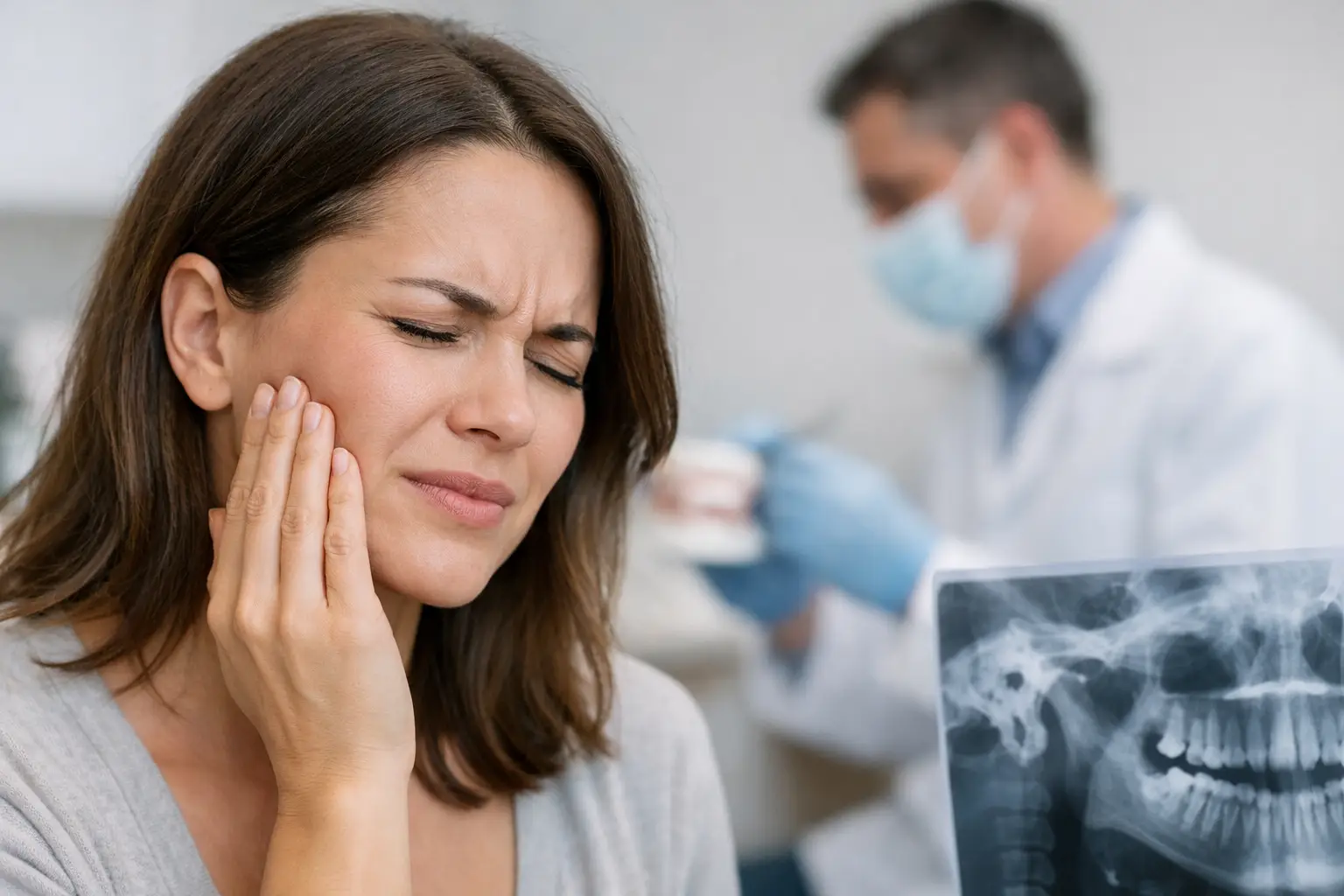
A click or pop when you open wide to eat a sandwich, yawn, or laugh can be unsettling. Jaw clicking is common, and it does not always signal a serious problem. Still, when the sound comes with pain, stiffness, headaches, or a jaw that catches, it is worth having it assessed rather than simply learning to work around it.
Your jaw joints work hard throughout the day. They help you speak, chew, swallow, and make facial expressions. A small change in how those joints, muscles, teeth, or bite work together can create noise and discomfort. The goal is not to worry about every sound, but to understand what your symptoms may be telling you and when gentle, personalized care can help.
What causes jaw clicking?
The joint that connects your lower jaw to your skull is called the temporomandibular joint, or TMJ. There is one on each side of your face, just in front of your ears. A small cushioning disc inside each joint helps the jaw move smoothly. A click can occur when that disc moves slightly out of position and then returns as you open or close your mouth.
For some people, this happens without pain or limitation and never progresses. Others notice clicking after a period of stress, frequent gum chewing, clenching their teeth, or opening their mouth widely. Jaw injury, arthritis, joint inflammation, and uneven pressure from the bite can also contribute.
Teeth grinding, known as bruxism, is a frequent factor. Many people clench or grind during sleep without realizing it. Over time, this can overload the jaw muscles and joints, contribute to worn teeth, and make clicking more noticeable. Daytime clenching can have a similar effect, especially during concentrated work, driving, or stressful moments.
A change in your bite may also deserve attention. If your teeth no longer come together the way they used to, or if chewing feels awkward on one side, the jaw joint and surrounding muscles may be compensating. That does not automatically mean that dental treatment is needed, but it is useful information for your dentist.
When jaw clicking is more than a sound
Painless, occasional clicking is often monitored rather than treated. The situation changes when the sound is paired with symptoms that affect comfort or function. Persistent pain near the ear, tenderness in the cheeks or temples, jaw fatigue, and recurring headaches can all be associated with jaw joint or muscle concerns.
Pay attention if you have trouble opening your mouth comfortably, if your jaw deviates to one side when opening, or if it feels as though it catches. A jaw that temporarily locks open or closed should be evaluated promptly. It can be frustrating and alarming, particularly when it interferes with eating, speaking, or everyday routines.
Arrange a dental assessment if you notice any of the following:
- Clicking that is new, frequent, or becoming louder alongside discomfort
- Pain when chewing, yawning, or opening your mouth wide
- Headaches, ear-area discomfort, or facial muscle soreness that keeps returning
- A jaw that locks, catches, or has a reduced range of movement
Severe facial swelling, fever, significant trauma, or difficulty breathing or swallowing requires urgent medical attention. These symptoms may point to an issue beyond a typical jaw joint concern.
Why a dental exam can be helpful
Jaw symptoms can have more than one cause. Ear conditions, sinus concerns, tooth pain, muscle tension, and TMJ disorders may feel similar, which is why a careful examination matters. Your dentist can look at the whole picture rather than focusing only on the clicking sound.
A dental assessment may include discussing when the symptoms began, whether you have been under added stress, and whether you wake with headaches or jaw soreness. Your dentist may examine your jaw movement, listen for joint sounds, check the muscles around your face and neck, and assess how your teeth meet. Signs of grinding, tooth wear, cracks, or changes in your bite can offer helpful clues.
In some cases, imaging or a referral to another healthcare professional may be appropriate. Conservative care is usually the starting point. Treatment depends on the cause, the severity of symptoms, and how much the issue is affecting your quality of life. There is no one-size-fits-all solution, and a comfortable plan should be personalized for you.
Simple steps that may reduce strain
While you are waiting for an appointment, a few small adjustments can reduce pressure on an irritated jaw. Choose softer foods for a short period if chewing is painful, and take smaller bites rather than opening wide. Try to avoid chewing gum, biting pens, nail biting, and other habits that keep the jaw working when it does not need to.
Warm compresses can ease tight jaw muscles for some people. Apply gentle warmth to the side of the face for 10 to 15 minutes, then allow your jaw to rest. If swelling follows a recent injury, a cool compress may be more comfortable initially. Your dentist or physician can advise you on pain relief options that are safe for your health needs.
It can also help to check your resting jaw position during the day. Your lips may be together, but your teeth should generally not be touching. Let your tongue rest lightly against the roof of your mouth behind your front teeth, relax your shoulders, and allow a small space between your upper and lower teeth. This simple habit can reduce unconscious clenching.
Stress does not cause every TMJ concern, but it can intensify muscle tension and grinding. Short movement breaks, relaxed breathing, and a consistent sleep routine may support your overall comfort. If you suspect nighttime grinding, do not buy a generic mouthguard without advice. A poorly fitting appliance can be uncomfortable and may not address your bite or jaw needs appropriately.
Treatment is often conservative and personalized
For many patients, jaw clicking improves with a combination of reduced strain, habit changes, and support for the teeth and jaw muscles. If grinding is contributing to tooth wear or soreness, a custom nightguard may be recommended. A professionally made appliance is designed around your teeth and bite, with follow-up adjustments when needed.
If a bite concern, damaged tooth, or missing tooth is affecting how you chew, restorative care may be part of the conversation. Orthodontic treatment can also be considered in selected situations, but it is not a universal answer for jaw clicking. The right approach depends on a thorough diagnosis and should focus on comfort, function, and long-term oral health rather than a quick fix.
Some patients benefit from physiotherapy or other collaborative care for muscle and joint rehabilitation. Your dental team can help determine when that type of support may be useful. At Victoria Park Dental, we take time to explain what we see, discuss practical options, and help you make an informed decision at a pace that feels comfortable.
What about jaw clicking in children and teens?
Children and teens can also experience jaw sounds, especially during growth or after habits such as chewing gum frequently. A painless click that is occasional may simply be monitored during regular dental visits. However, pain, locking, headaches, difficulty eating, or a noticeable change in how the teeth fit together should be assessed.
Early, reassuring evaluation can be particularly helpful for younger patients. It allows the dental team to look for signs of grinding, bite changes, or muscle tension while supporting healthy habits without making dental visits feel intimidating.
A clicking jaw deserves curiosity, not panic. If the sound is painless and infrequent, mention it at your next checkup. If it is affecting how you eat, sleep, speak, or feel each day, booking an assessment is a caring next step toward a more comfortable smile.