
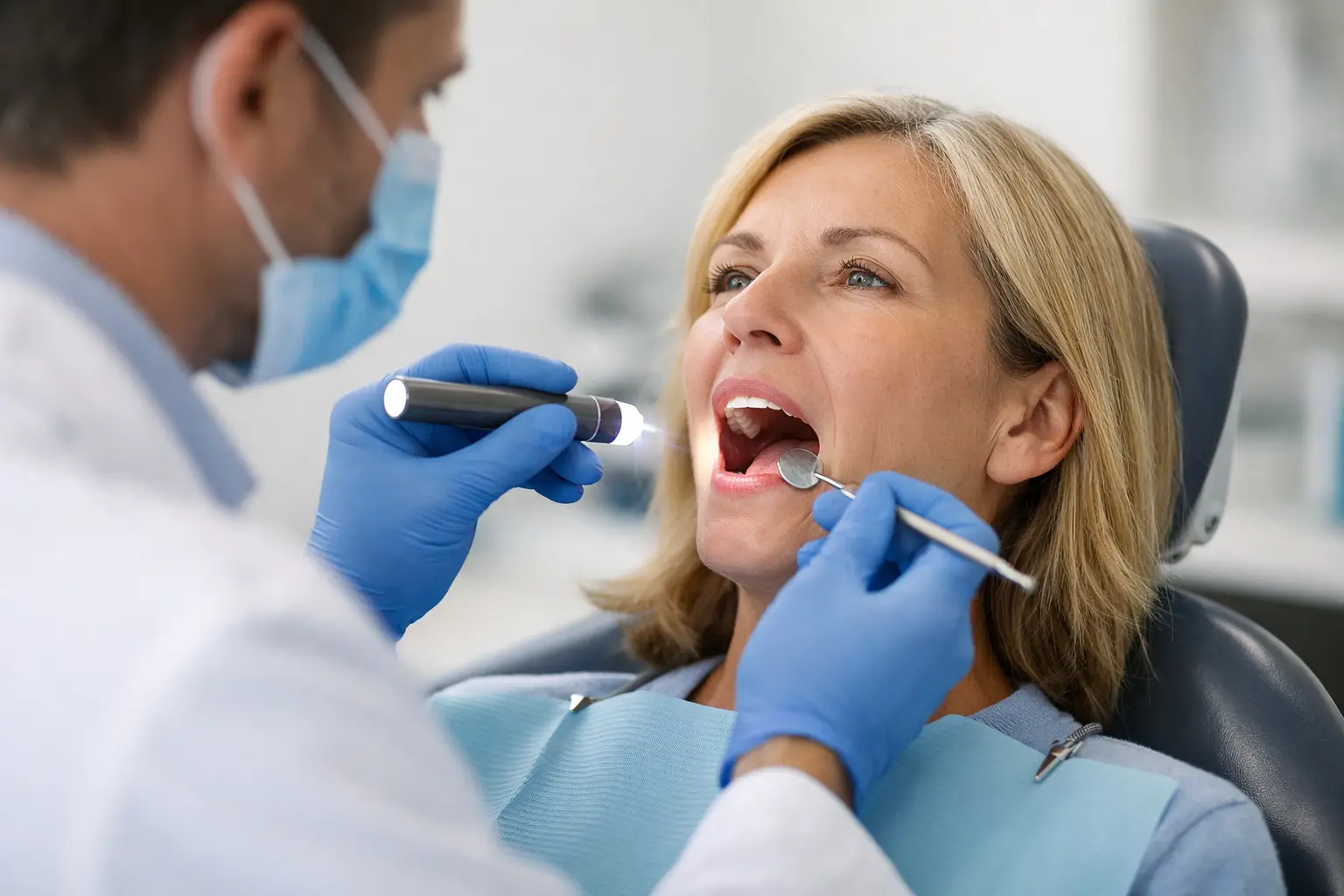
A routine dental visit is about more than clean teeth and healthy gums. This guide to oral cancer screening explains a brief but valuable part of preventive care: checking the lips, mouth, tongue, throat area, and nearby tissues for changes that deserve closer attention. Most findings are not cancer, but identifying unusual changes early can make a meaningful difference.
Oral cancer can affect people of many ages and backgrounds. It is more common with certain risk factors, yet it can occur in people who do not smoke, drink heavily, or feel unwell. That is one reason regular dental examinations matter. Your dentist sees areas of your mouth that are difficult to assess on your own and can compare what they see from visit to visit.
What an oral cancer screening involves
An oral cancer screening is a visual and physical examination performed during a dental checkup. It is generally quick, comfortable, and non-invasive. Your dental team looks for changes in the soft tissues of your mouth and feels for unusual lumps, thickening, tenderness, or swollen lymph nodes.
The examination may include your lips, cheeks, gums, palate, tongue, floor of the mouth, tonsil area, jaw and neck. You may be asked to move your tongue in different directions or to open wider so the back and sides of your mouth can be viewed clearly. A clinician may use gauze to gently hold the tongue while examining areas that are easy to miss in a mirror.
Screening is not the same as a diagnosis. A sore, patch, or lump can have many causes, including a bite injury, irritation from a sharp tooth, infection, or a reaction to a dental appliance. If something looks unusual, your dentist may monitor it after removing a likely source of irritation, recommend further assessment, or refer you to an appropriate specialist. The goal is not to cause alarm. It is to make sure a persistent change receives the attention it needs.
Why screening matters, even without symptoms
Oral cancer does not always cause pain in its earliest stages. Some changes are subtle and may be easy to overlook, particularly on the sides or underside of the tongue and at the back of the mouth. People often assume a painless mark is harmless, but absence of pain is not a reliable guide.
Routine screening gives your dentist a baseline. If you have a naturally darker area of tissue, prominent glands, or another normal variation, a record of it helps make future comparisons more meaningful. Regular care also creates an opportunity to discuss changes in your health, medications, tobacco use, alcohol intake, or concerns about your mouth without waiting for a problem to become disruptive.
Screening is particularly worthwhile because oral health and overall health are connected. A mouth that feels comfortable, functions well, and is checked regularly supports eating, speaking, smiling, and daily confidence. Prevention is not about expecting the worst. It is about making space for early action when it can be most helpful.
Common signs worth checking
Many mouth sores heal quickly. A canker sore, for example, often improves within one or two weeks. What matters most is whether a change persists, worsens, or has no clear explanation.
Book an appointment if you notice a sore, ulcer, or irritated area that has not healed after two weeks. Other reasons to arrange an assessment include a red or white patch, a lump or thickened area, unexplained bleeding, persistent numbness, pain when swallowing, a lasting sore throat, or a change in your voice. Difficulty moving your jaw or tongue, a loose tooth without an obvious dental cause, or swelling in the neck also deserve professional attention.
These signs do not automatically mean cancer. They simply call for a careful examination. Waiting to see if an issue disappears can be reasonable for a minor, clearly explained injury, such as a cheek bite. If it is still present after two weeks, or you are uncertain about what caused it, it is better to have it checked.
Understanding risk factors
Tobacco use is a significant risk factor for oral cancer, including cigarettes, cigars, pipes, chewing tobacco, and vaping products that may irritate oral tissues. Frequent or heavy alcohol use can also raise risk, especially when combined with tobacco. Reducing or stopping these habits benefits both oral and general health, and your dental team can discuss supportive next steps without judgement.
Human papillomavirus, or HPV, is linked to some cancers of the mouth and throat, particularly in the oropharyngeal area. HPV is common, and having it does not mean someone will develop cancer. Vaccination can help protect against certain HPV-related cancers, and it is worth discussing with your physician or pharmacist if you or your child have questions about eligibility.
Sun exposure can contribute to cancer of the lips, particularly the lower lip. Use a lip balm with sun protection when spending time outdoors, whether you are skiing on the North Shore, walking the seawall, or simply commuting on a bright day.
Age can increase risk, but it is not the whole story. A healthy lifestyle lowers risk but does not eliminate it. That is why screening should be part of ongoing dental care for adults, regardless of whether they identify with a particular risk factor.
How often should you be screened?
For most patients, an oral cancer screening can be included with regular checkups. The right recall schedule depends on your oral health, history of gum disease or cavities, treatment needs, and personal risk factors. Some people benefit from visits every six months, while others need more frequent monitoring or may be able to follow a different schedule recommended by their dentist.
If you use tobacco, have a history of oral lesions, have previously received treatment for cancer, or have a persistent concern, tell your dental team. More frequent evaluations may be appropriate. It is also wise to contact your dentist between scheduled visits if a new symptom lasts more than two weeks. You do not need to wait for your next hygiene appointment.
At Victoria Park Dental, preventive appointments are personalized to the person in the chair. That means taking time to look beyond the immediate reason for your visit and helping you understand what is normal, what can be watched, and what should be investigated further.
Can you check your mouth at home?
A simple monthly self-check can help you become familiar with your mouth, but it should never replace professional screening. In good light, look at your lips, cheeks, gums, palate, and tongue. Lift your tongue to look underneath it, and gently feel for areas that seem new, firm, or sore. If you wear dentures or another removable appliance, remove it before checking the tissues beneath.
Avoid trying to diagnose a spot from online photos or assuming every colour change is dangerous. Mouth tissues vary naturally, and minor irritation is common. The useful purpose of a self-check is noticing what is new or not healing, then bringing that information to a dental professional.
What happens if your dentist finds something?
The next step depends on what is found. Your dentist may identify a simple cause, such as rubbing from a rough filling, a fractured tooth, or an appliance that needs adjustment. They may photograph the area, document its size and appearance, and arrange a short follow-up to see whether it resolves.
When a lesion has no clear cause, persists, or appears concerning, referral for further assessment is the cautious choice. A specialist may recommend imaging, a more detailed examination, or a biopsy. A biopsy is the only way to confirm whether a suspicious area contains cancerous or precancerous cells. If testing is recommended, it does not mean a diagnosis has been made. It means you are moving from uncertainty to clear information.
It is natural to feel worried when a referral is suggested. Ask what was observed, what the possible causes are, what the recommended timeline is, and who will coordinate your follow-up. Clear answers can make the process feel more manageable.
Your mouth changes throughout life, and most changes are harmless. Still, a persistent sore or unfamiliar patch deserves your attention. Keeping regular dental visits and speaking up early gives you the best chance to protect your health with calm, informed care.