
A missing tooth can change more than a photograph. It can affect how comfortably you chew, how clearly you speak, and whether you find yourself avoiding certain foods or smiling less freely. The best options for missing teeth depend on where the gap is, how many teeth are involved, the health of your gums and jawbone, and what feels realistic for your life.
There is no one-size-fits-all answer. A thoughtful treatment plan considers your long-term oral health alongside comfort, appearance, timing, and budget. Replacing a tooth is not simply about filling a space. It is about helping the rest of your smile continue to function well.
Why replacing a missing tooth can matter
When a tooth is lost, nearby teeth may gradually shift toward the open space. This can change how your bite comes together and make brushing and flossing more difficult. If a back tooth is missing, you may start chewing more on the other side, which can place extra strain on those teeth and your jaw.
Over time, the jawbone in the area of a missing tooth can also lose density because it is no longer receiving the stimulation of a tooth root. This does not mean every gap needs the same treatment immediately, but it is a good reason to discuss your options early. A dentist can help you understand what is happening now and what may be easier to address sooner rather than later.
Best options for missing teeth: a practical comparison
Dental implants
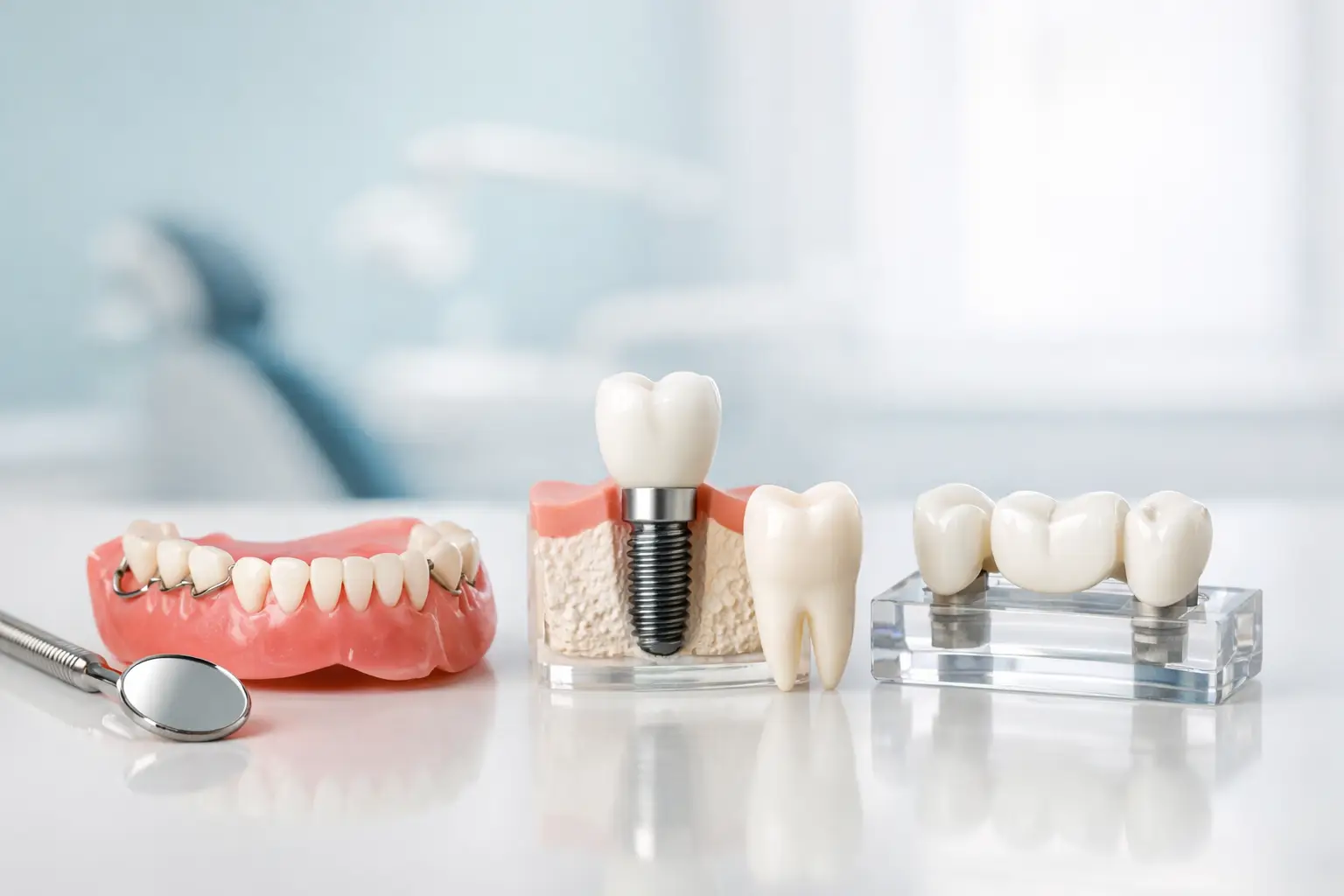
A dental implant replaces the root of a missing tooth with a small post placed in the jawbone. Once the area has healed, the implant is fitted with a custom crown, bridge, or denture. For a single missing tooth, an implant and crown can look and feel very similar to a natural tooth.
One of the main advantages of implants is that they do not rely on adjacent teeth for support. They also help stimulate the jawbone in the area where the tooth was lost. With consistent home care and professional maintenance, implants can be a long-lasting solution.
Implants do require a surgical procedure and a healing period, so they are not always the fastest choice. Adequate bone and healthy gums are important, although some patients may be candidates for additional procedures, such as bone grafting, before implant placement. Your overall health, medications, smoking status, and ability to maintain good oral hygiene will also be part of the conversation.
Dental bridges
A dental bridge fills a gap by attaching a replacement tooth to crowns placed on the teeth beside it. It is a fixed restoration, meaning it stays in place rather than being removed for cleaning. Bridges can be an effective, natural-looking option for one or several missing teeth, particularly when the neighbouring teeth already need crowns because they are heavily restored or weakened.
Compared with an implant, a bridge may involve a shorter treatment timeline and does not require surgery. The trade-off is that traditional bridges require preparation of the supporting teeth. They also do not provide the same stimulation to the jawbone beneath the missing tooth.
For some patients, that balance makes excellent sense. A bridge can restore chewing comfort and confidence efficiently, especially when it fits the condition of the surrounding teeth and the patient’s treatment goals. Modern digital planning and high-quality materials can help create restorations that blend naturally with the smile.
Partial dentures
A removable partial denture replaces one or more missing teeth and is designed to fit around the teeth that remain. It may use a discreet metal framework or tooth-coloured materials, depending on the design and clinical needs. Partial dentures are often considered when several teeth are missing in different areas of the mouth or when a fixed solution is not the right fit.
This option can be more affordable upfront than multiple implants and does not require surgery. It can also be adjusted or modified if future dental needs change. However, it does need to be removed for cleaning, and some people need time to get used to the feeling of wearing it.
A well-designed partial denture should be comfortable and stable, but it still needs regular review. Natural teeth and gums can change over time, and routine examinations help ensure the appliance continues to fit properly and supports, rather than compromises, oral health.
Complete dentures and implant-supported dentures
When all teeth in the upper or lower jaw are missing, a complete denture can restore the appearance of a full smile and improve everyday function. Conventional dentures rest on the gums and are removable. They have helped many people eat, speak, and smile with greater confidence.
Because the shape of the jaw changes over time, dentures may eventually need relining, adjustment, or replacement. Lower dentures can be especially challenging to keep stable because there is less surface area for suction.
Implant-supported dentures offer another approach. A small number of implants can provide added retention for a removable denture, while more implants may be used to support a fixed full-arch restoration in appropriate cases. These treatments can offer greater stability, but they involve surgery, a longer treatment process, and a higher investment. The right choice depends on bone health, medical history, expectations, and the type of daily care you are comfortable maintaining.
How to choose the right tooth replacement option
The most suitable option is usually the one that addresses both the immediate concern and the health of the surrounding smile. A front tooth may require special attention to appearance and gum contours. A missing molar may be less visible but still important for chewing and bite balance. If several teeth are missing, the way forces are distributed across the mouth becomes particularly important.
A comprehensive assessment may include an examination of your teeth and gums, bite evaluation, and digital imaging to look at bone levels and the position of nearby structures. From there, your dentist can explain which treatments are predictable for your situation and which may involve additional steps.
It also helps to be open about practical priorities. Some patients want the most fixed, natural-feeling solution possible. Others prefer to avoid surgery, complete treatment within a certain timeframe, or start with an option that works within a defined budget. These are reasonable considerations, and they belong in the planning process.
Caring for your replacement teeth
Every replacement option needs care. Implants, bridges, and dentures do not get cavities, but the gums, bone, and natural teeth around them can still develop problems. Plaque accumulation around a bridge or implant can lead to inflammation, while an ill-fitting denture can irritate the gums and affect function.
Daily brushing, cleaning between teeth or around restorations, and regular hygiene visits are essential. Your dental team may recommend specific brushes, flossing tools, or interdental cleaners based on the restoration you choose. Dentures should be removed and cleaned as directed, and they should never be adjusted at home.
Regular checkups give your dentist the opportunity to monitor the fit and condition of your restoration, your bite, and the health of the tissues supporting it. This ongoing care is one of the best ways to protect your investment and maintain a comfortable smile.
When should you book an assessment?
If you have recently lost a tooth, are living with an older bridge or denture, or have a gap that is becoming harder to manage, an assessment can provide clarity. Even if you are unsure about treatment right now, knowing your options can help you make decisions before shifting teeth, bone changes, or discomfort add complexity.
At Victoria Park Dental, personalized planning begins with listening to what matters to you. A comfortable, healthy smile is built one informed decision at a time, and the right next step may be simpler than you expect.