
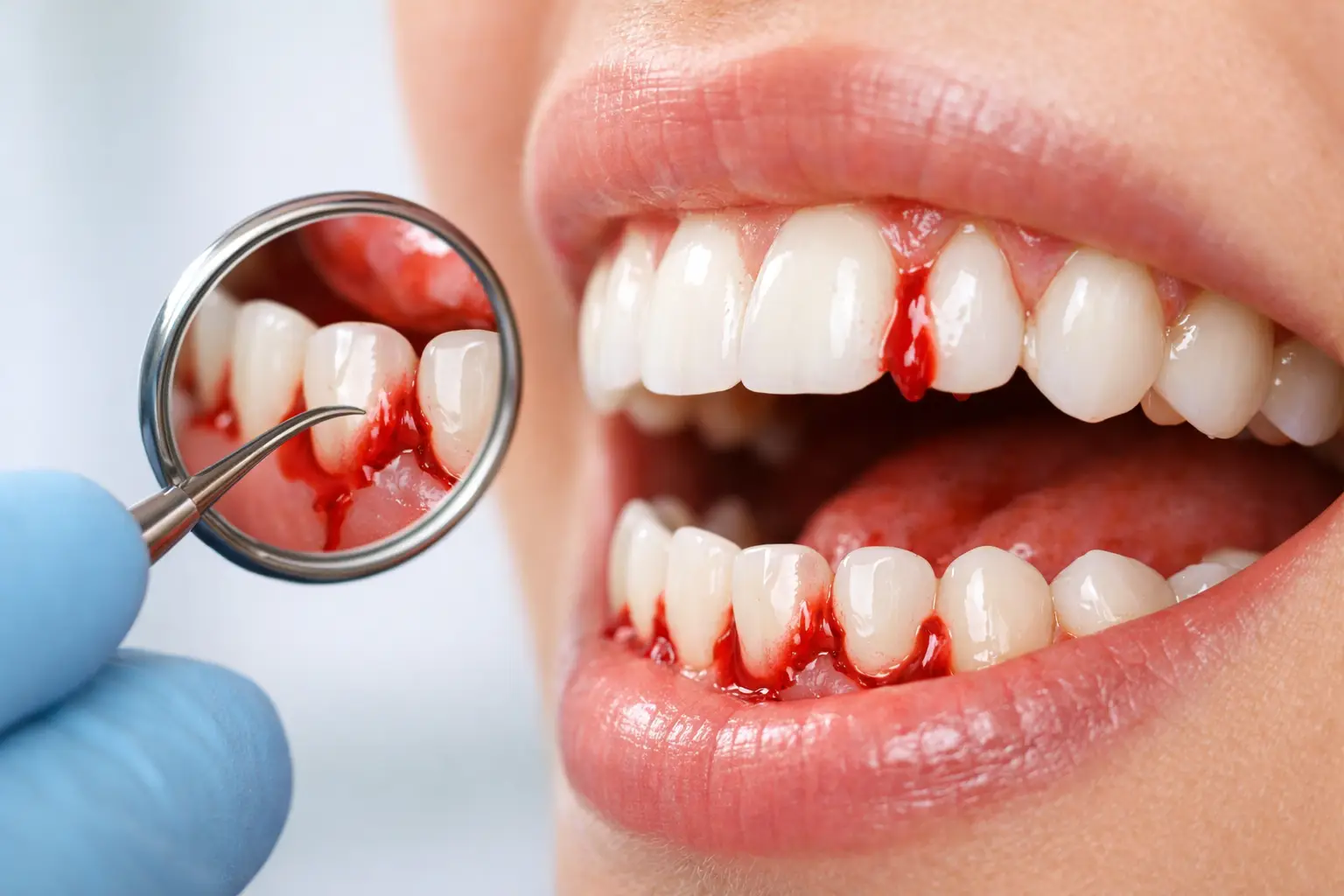
You spit after brushing and notice pink in the sink. It is easy to dismiss it as brushing too hard once or eating something sharp, but if you have ever wondered why do gums bleed, the answer is usually worth paying attention to. Bleeding gums are often an early sign that your mouth needs a little more care, not less.
Why do gums bleed in the first place?
Healthy gums do not usually bleed during brushing or flossing. When they do, the most common reason is inflammation caused by plaque buildup along the gumline. Plaque is a sticky film of bacteria that forms on teeth every day. If it is not removed thoroughly, it can irritate the gums and lead to gingivitis, which is the earliest stage of gum disease.
At this stage, the gums may look redder than usual, feel tender, appear slightly puffy, or bleed when you brush or floss. The good news is that gingivitis is often reversible with improved home care and professional cleanings. Catching it early can make a big difference.
Sometimes people stop flossing when they see blood, assuming flossing caused the problem. More often, the opposite is true. Gums that bleed when flossing are often reacting to inflammation that was already there. Gentle, consistent cleaning is usually part of the solution.
The most common causes of bleeding gums
Gingivitis is the leading cause, but it is not the only one. A few different factors can make gum tissue more likely to bleed.
Plaque and tartar buildup
When plaque sits on the teeth for too long, it can harden into tartar. Tartar cannot be removed with brushing alone, and it creates more places for bacteria to collect near the gums. This ongoing irritation can keep gums inflamed and prone to bleeding.
Brushing or flossing too aggressively
A firm hand is not always better. Brushing with a hard-bristled toothbrush or snapping floss into the gums can irritate delicate tissue. That said, aggressive brushing usually causes localized irritation, while generalized bleeding around many teeth often points to inflammation from plaque.
A new flossing routine
If you have not flossed consistently for a while, your gums may bleed when you start again. This can happen because the tissue is already inflamed. In many cases, the bleeding improves within several days to a couple of weeks of gentle daily flossing.
Hormonal changes
Pregnancy, puberty, menstruation, and menopause can affect how gums respond to plaque. Some people notice increased tenderness or bleeding during these times, even when their home care has not changed much. This does not mean bleeding should be ignored, but it does help explain why symptoms can flare up.
Certain medications
Some blood thinners can make bleeding more noticeable. Other medications may contribute indirectly by causing dry mouth, which can increase plaque buildup and irritation. If your gums have started bleeding after a medication change, it is worth mentioning at your dental appointment.
Vitamin deficiencies and health conditions
Less commonly, deficiencies such as low vitamin C or vitamin K may play a role. Some medical conditions can also affect bleeding or healing. These situations are not the most likely cause, but they matter if the bleeding is frequent, heavy, or paired with other symptoms.
When bleeding gums may mean gum disease is progressing
Gingivitis can develop into periodontitis if inflammation is left untreated. This is a more advanced form of gum disease that affects the tissues and bone supporting the teeth. Bleeding is still common, but it may come with other changes such as persistent bad breath, gum recession, sensitivity, or teeth that feel loose.
This is where timing matters. Gum disease does not always cause pain early on, so bleeding may be the first sign people notice. Waiting until something hurts can mean the problem has had more time to progress.
If bleeding happens regularly, especially along with puffiness or tenderness, it is a smart time to book an exam. A professional assessment can help determine whether the issue is mild inflammation, deeper periodontal concerns, or something else entirely.
Why do gums bleed even when you brush every day?
This is a common and understandable question. Brushing every day is essential, but technique, timing, and consistency all matter. If plaque is being missed along the gumline, if flossing is irregular, or if tartar has already formed, bleeding can still happen even in someone who brushes faithfully.
There is also the question of tools. A soft-bristled toothbrush is usually the best choice for most people. Brushing for two full minutes and angling the bristles gently toward the gumline tends to clean more effectively than scrubbing hard across the teeth.
For some patients, crowded teeth, dental restorations, or orthodontic appliances can make cleaning more challenging. In those cases, personalized guidance can help refine the routine so it works better for your mouth, not just in theory.
What you can do at home
If your gums bleed occasionally, the right home care can often help calm the inflammation. The key is to be gentle and consistent.
Brush twice a day with a soft-bristled toothbrush and fluoride toothpaste. Floss once a day, moving carefully between each tooth and curving the floss around the side of the tooth rather than forcing it straight down. If traditional floss is difficult, other interdental tools may be easier to use well.
It also helps to pay attention to the areas that tend to be missed. The back molars and the gumline are common trouble spots. If you are unsure whether your technique is effective, asking your dental team for a quick demonstration can be surprisingly helpful.
If smoking or vaping is part of the picture, reducing or stopping can improve gum health over time. Tobacco affects circulation and healing, which can make gum problems harder to control.
When to see a dentist about bleeding gums
A little blood once in a while is not always an emergency, but recurrent bleeding should not be treated as normal. It is a good idea to schedule a visit if your gums bleed often, if the bleeding lasts more than a week despite better home care, or if you also notice swelling, bad breath, gum recession, or sensitivity.
You should also check in sooner if bleeding starts suddenly and heavily, especially if you have not changed your brushing or flossing routine. In some cases, the cause may not be purely dental.
During a visit, your dentist or hygienist can look for plaque and tartar buildup, measure gum health, and assess whether there are signs of gingivitis or periodontitis. The goal is not just to stop the bleeding in the moment. It is to understand why it is happening and create a plan that protects your long-term oral health.
Treatment depends on the cause
For many people, a professional cleaning and a more effective home routine are enough to get things back on track. If gum disease is more advanced, treatment may involve deeper cleaning below the gumline and closer monitoring over time.
If the issue is related to brushing habits, appliance care, medication changes, or hormonal shifts, the approach may be different. That is why an individualized plan matters. The same symptom can have different causes, and the best treatment starts with a clear diagnosis.
At a patient-centred practice like Victoria Park Dental, this kind of conversation should feel practical and reassuring. Bleeding gums are common, and they are something dental teams see every day. The important part is addressing them early, before a manageable issue becomes a more complex one.
Can bleeding gums be prevented?
Often, yes. Preventing bleeding gums usually comes down to routine care and early attention. Regular checkups and hygiene visits help remove buildup that daily brushing cannot. They also give your dental team a chance to spot subtle signs of inflammation before they turn into larger problems.
At home, the best prevention is consistent plaque removal with gentle technique. It sounds simple, but small habits done every day matter more than occasional bursts of perfect effort. If your gums have been sensitive in the past, keeping up with daily care is usually better than backing off.
There is a trade-off here. Being more vigorous does not make oral care more effective, but being too cautious can leave plaque behind. The goal is thorough, not forceful.
Bleeding gums are your mouth’s way of asking for attention. In many cases, the cause is straightforward and highly treatable. A little guidance, a few adjustments, and timely care can go a long way toward helping your gums feel healthy again.