
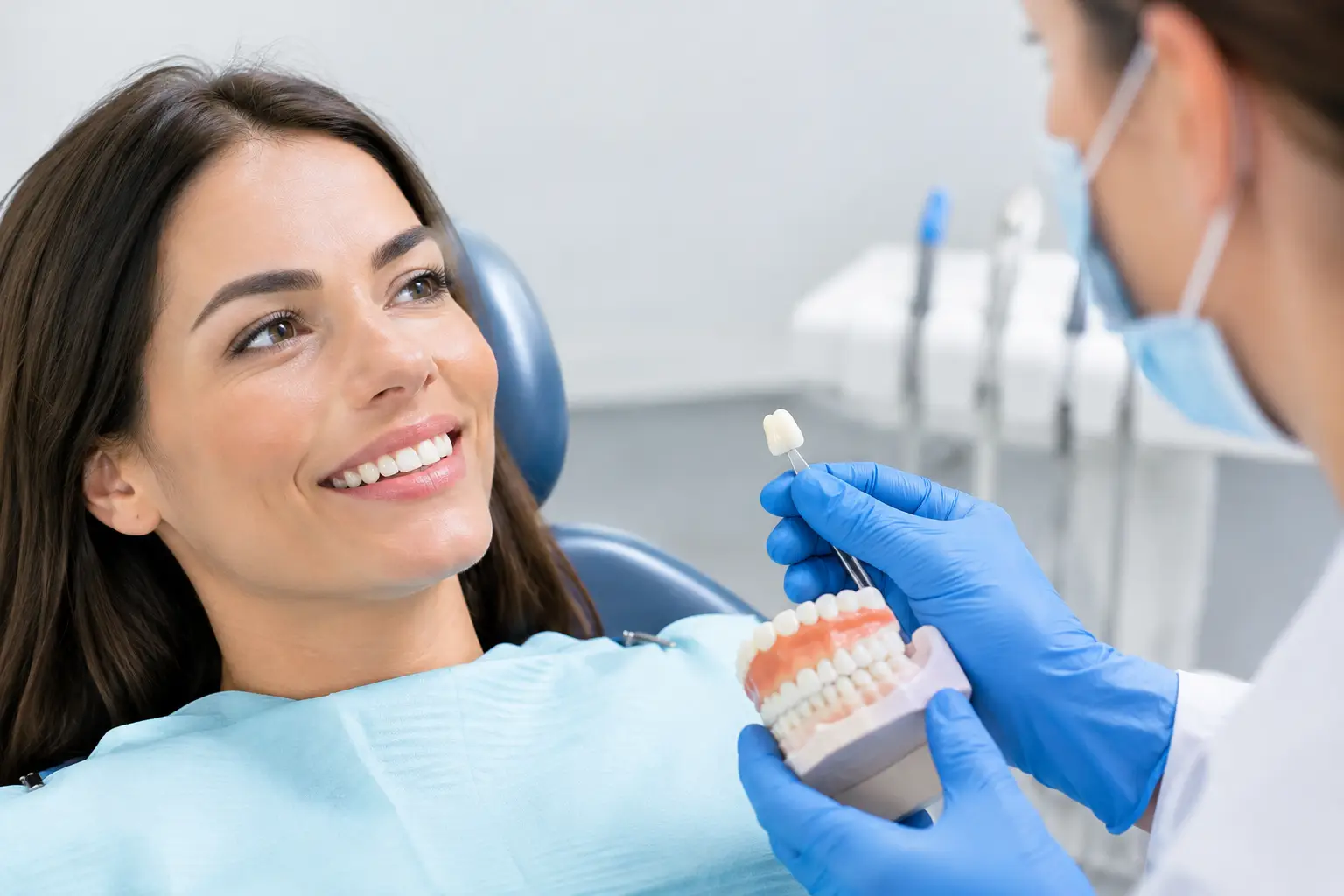
A tooth can look mostly intact and still need more protection than a filling can provide. Deep decay, a large old filling, a crack, or root canal treatment can leave the remaining tooth structure vulnerable to breaking. Dental crowns are custom restorations designed to cover and support that tooth, helping you chew comfortably while preserving as much of your natural tooth as possible.
For many patients, the thought of a crown raises practical questions: Will it look natural? Does the appointment hurt? How long will it last? The answers depend on your tooth, bite, oral health, and the material chosen. A careful examination is the best place to start, because the right treatment is always personalized.
What are dental crowns?
A dental crown is a cap that fits over the visible part of a prepared tooth. It restores the tooth’s shape, strength, and function, while also improving its appearance when needed. Unlike a filling, which replaces only the damaged portion of a tooth, a crown surrounds the tooth above the gumline.
Crowns are made to blend with your smile. Modern ceramic materials can be matched closely to the colour and translucency of neighbouring teeth, particularly for teeth near the front of the mouth. For back teeth, the focus is often on strength as well as appearance, since these teeth handle greater chewing forces.
A crown is not automatically the answer for every damaged tooth. If there is enough healthy enamel and tooth structure remaining, a conservative filling or bonded restoration may be a better choice. Protecting healthy natural tooth structure is an important part of long-term dental care.
When a crown may be recommended
Your dentist may recommend a crown when a tooth needs support that a filling cannot reliably provide. A common example is a tooth with a very large filling and thin remaining walls. Those walls may flex or crack under the pressure of chewing, especially if you clench or grind your teeth.
Crowns are also often used after root canal treatment. Once the nerve and blood supply inside a tooth have been treated, the tooth can become more brittle over time. A crown may reduce the chance of a significant fracture, particularly on molars and premolars.
Other situations include a broken or cracked tooth, severe wear from grinding, a tooth with extensive decay, or an older crown that has failed. Crowns can also be part of a cosmetic plan when a tooth has a major shape, colour, or structural concern that cannot be addressed predictably with more conservative options.
The key question is not simply whether a tooth can be restored. It is whether the restoration can be expected to stay stable and comfortable for years. That is why your dentist will consider the crack pattern, the condition of the gums and bone, your bite, and how much sound tooth structure remains.
What happens during crown treatment?
The process begins with an examination and, when appropriate, digital imaging. Your dentist will review the tooth, surrounding tissues, and bite, then explain whether a crown is recommended and what alternatives may be available. If there is active decay or inflammation, that issue needs to be addressed first.
At the preparation appointment, the tooth is gently shaped so the crown can fit securely without feeling bulky. Local anesthetic is used to keep you comfortable. If the tooth has been weakened by decay or an old filling, it may first be rebuilt to create a stable foundation for the crown.
Digital scanning has made the next step more comfortable for many patients. Instead of conventional impression material, a small scanner can create a detailed digital model of the tooth. The crown is then designed to fit your bite and the contours of your smile.
Depending on the case, a temporary crown may be placed while the final restoration is being made. At Victoria Park Dental, CEREC technology may allow certain crowns to be designed, fabricated, and placed in a single visit. Same-day treatment can be a convenient option, but it is not necessarily right for every tooth or every type of crown. Complex cases may benefit from a different material or laboratory process.
When your final crown is ready, your dentist checks its fit, colour, contact with nearby teeth, and bite before permanently bonding it into place. It should feel comfortable and natural when you chew. A brief adjustment period is normal, but ongoing pain, sensitivity, or a bite that feels high should be assessed promptly.
Choosing the right crown material
There is no single best crown material for every person. The ideal choice depends on the location of the tooth, the forces on your bite, how much natural tooth remains, and your aesthetic goals.
All-ceramic crowns are a popular option because they can look highly natural and contain no metal. They are often well suited to visible teeth and can also work beautifully in many back-tooth situations. Zirconia is a strong ceramic material often considered for teeth that need extra durability.
Porcelain fused to metal crowns have a metal substructure beneath a porcelain exterior. They have a long history in dentistry and may be appropriate in some cases, though an all-ceramic option can offer more natural light reflection around the gumline. Gold alloys remain durable and gentle on opposing teeth, but their colour makes them less common for patients who prefer a tooth-coloured restoration.
Your dentist can explain the trade-offs clearly. A crown that looks ideal in the front of the mouth may not be the best choice for a heavy grinder’s back molar. The most successful result is one that respects both appearance and function.
How long do crowns last?
With good care, many crowns last well over a decade. Their lifespan varies because a crown is only as healthy as the tooth and gums around it. Decay can still develop at the edge where the crown meets the tooth, and gum disease can affect the supporting bone.
Daily brushing with fluoride toothpaste and cleaning between teeth are essential. Pay close attention to the gumline around the crown, where plaque can collect. Regular checkups and hygiene appointments allow your dental team to monitor the restoration, gums, bite, and any early signs of wear before they become larger problems.
Hard habits can shorten a crown’s lifespan. Avoid using teeth to open packages, and be mindful when chewing ice, hard candy, or unpopped popcorn kernels. If you clench or grind at night, a custom nightguard may help protect both your crown and your natural teeth from excessive force.
Common questions about dental crowns
Will getting a crown hurt?
Crown preparation is performed with local anesthetic, so you should not feel pain during treatment. It is common to notice mild tenderness in the gums or jaw after an appointment, especially if you have kept your mouth open for some time. Sensitivity should improve rather than worsen. Contact your dental office if you have persistent pain, swelling, or discomfort when biting.
Can a crowned tooth still get a cavity?
Yes. The crown itself cannot decay, but the natural tooth at its edges can. Consistent home care and professional cleanings are the best protection.
What if my crown comes loose or breaks?
Keep the crown if you can find it and contact your dental office as soon as possible. Avoid chewing on that side. Do not use household glue to reattach it, as this can damage the crown or make proper treatment more difficult.
A crown should support more than a single tooth. When it is thoughtfully planned, carefully fitted, and maintained through regular care, it can help you eat, speak, and smile with confidence. If a tooth feels cracked, sensitive, or repeatedly needs repair, addressing it early may give you more conservative options and a better long-term outcome.