
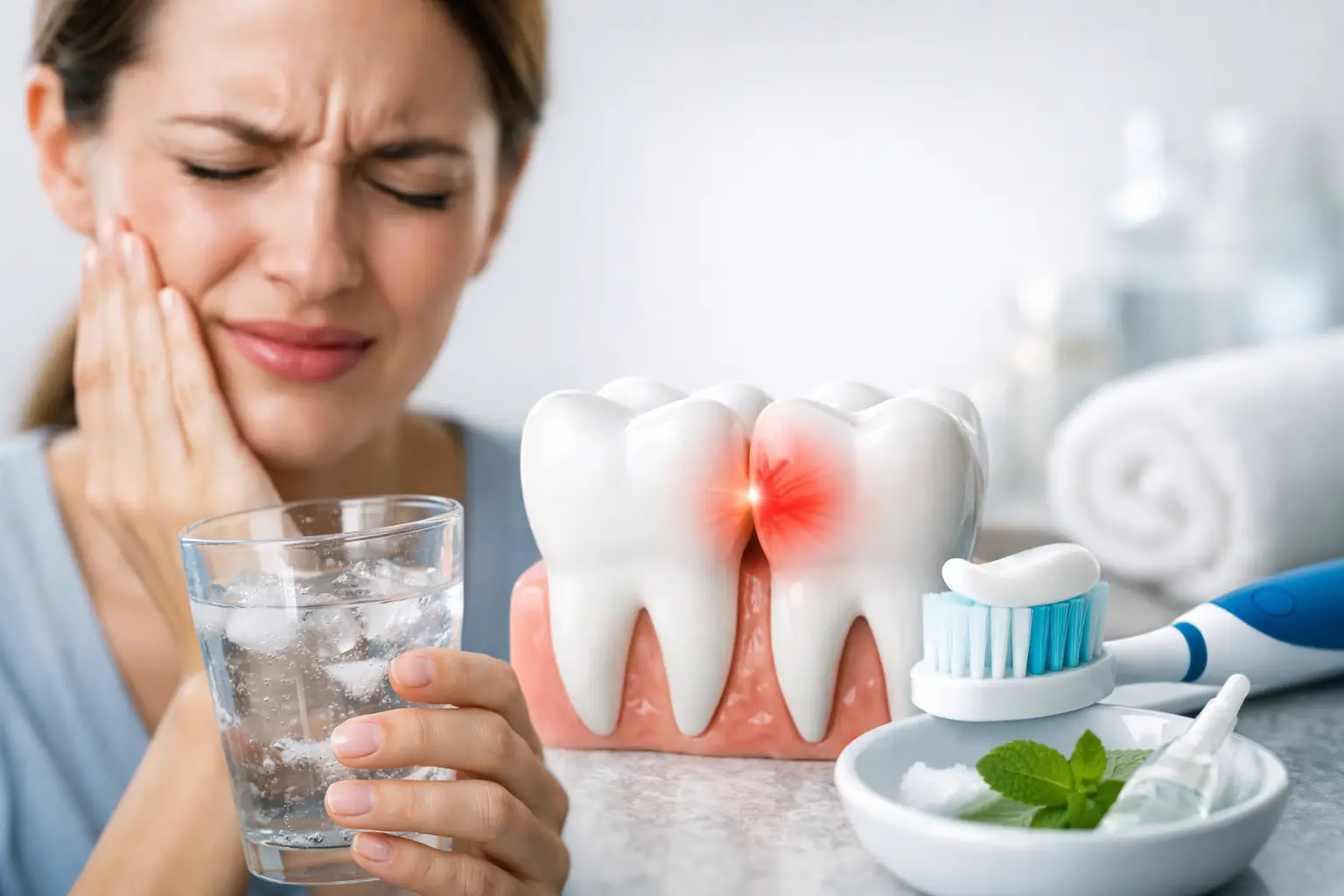
That sharp jolt when cold water touches a tooth can make an ordinary morning feel surprisingly stressful. Learning how to stop tooth sensitivity starts with identifying the trigger, then choosing care that protects your teeth instead of simply avoiding the foods and drinks you enjoy.
Sensitivity is common, but it is not something you need to accept as your normal. Sometimes it comes from exposed tooth roots or worn enamel. Other times, it is an early clue that a tooth, filling, or gum needs attention. A personalized dental assessment can distinguish between a manageable sensitivity issue and a problem that needs treatment.
Why teeth become sensitive
A healthy tooth is protected by enamel above the gumline and cementum along the root. Beneath those protective layers is dentin, a naturally porous material connected to the tooth’s nerve. When enamel wears down or gums recede, heat, cold, sweetness, acidity, or even a breath of cold air can travel through those tiny channels and create a brief, sharp sensation.
Common causes include brushing too hard, gum recession, tooth decay, cracked teeth, worn or leaking fillings, and enamel erosion from frequent acidic foods or beverages. Grinding or clenching can also contribute by placing extra force on teeth and causing small cracks or wear over time.
Sensitivity can also occur after a dental cleaning, whitening treatment, or a new restoration. In many cases, this is temporary. The key is noticing whether the feeling improves over several days or becomes more frequent, stronger, or focused on one tooth.
How to stop tooth sensitivity at home
The most helpful home care is gentle, consistent, and focused on protecting enamel and gums. Results are not always immediate. Desensitizing toothpaste, for example, often needs two to four weeks of daily use before you notice a meaningful change.
Choose a toothpaste made for sensitive teeth
Use a toothpaste labelled for sensitivity twice a day. These formulas can help block the pathways that carry sensations toward the tooth nerve or support enamel remineralization, depending on the active ingredient.
Brush with a soft-bristled toothbrush and a small, pea-sized amount of toothpaste. After brushing at night, spit out the excess but avoid rinsing vigorously with water. This gives the active ingredients more time to remain on your teeth. For one particularly sensitive area, your dentist may suggest gently applying a small amount of sensitivity toothpaste directly to the tooth before bed.
Adjust your brushing technique
More pressure does not mean a better clean. Aggressive brushing, especially with a medium- or hard-bristled brush, can wear away enamel near the gumline and irritate the gums.
Hold your toothbrush at a slight angle toward the gumline and use small, gentle circles. An electric toothbrush with a pressure sensor can be useful if you tend to brush forcefully, but a manual brush works well with the right technique. Replace the brush head or toothbrush when the bristles begin to splay.
Be strategic with acidic food and drinks
Coffee, citrus, wine, sparkling water, sports drinks, kombucha, and soft drinks can soften enamel temporarily. You do not have to eliminate every acidic choice, but frequent sipping throughout the day gives acids repeated contact with your teeth.
Try having acidic drinks with a meal rather than slowly sipping them over hours. Drinking water afterward helps rinse the mouth. Wait about 30 minutes before brushing, since brushing immediately after acid exposure can increase enamel wear while the surface is softened.
Protect your teeth from grinding
If you wake with jaw tension, headaches, or sore teeth, clenching or grinding may be contributing to sensitivity. A custom night guard can help cushion teeth and reduce the effects of nighttime grinding. Over-the-counter guards may offer temporary protection, but they do not fit every mouth well and can feel bulky. A dentist can assess whether a custom option is appropriate and check for wear patterns that need attention.
Keep up with gentle gum care
Healthy gums cover and protect the roots of your teeth. Flossing or using another interdental cleaner daily helps remove plaque where your toothbrush cannot reach. If your gums bleed, feel tender, or appear to be pulling away from your teeth, do not stop cleaning the area. Instead, clean gently and book a dental visit to understand why it is happening.
What not to do when a tooth hurts
Avoid using home remedies that are abrasive or highly acidic. Scrubbing with baking soda, brushing with charcoal products, or applying acidic ingredients can worsen enamel loss and sensitivity. Whitening products may also make sensitivity more noticeable for some people, particularly when used too often or without professional guidance.
It is also tempting to avoid brushing a sensitive tooth. Unfortunately, plaque left around that area can increase gum inflammation and make the situation worse. Keep the area clean with a soft brush and sensitivity toothpaste, then arrange an assessment if the discomfort continues.
When sensitivity needs dental treatment
At-home changes help when sensitivity is related to mild enamel wear or exposed dentin, but they cannot repair a cavity, seal a crack, or treat gum disease. A dental examination helps identify the actual cause and prevents treatment from becoming more extensive later.
Depending on what is found, treatment may include fluoride varnish to strengthen vulnerable enamel, a protective bonding material over exposed root surfaces, a filling to repair decay or a damaged restoration, or treatment for gum recession and periodontal concerns. A cracked tooth may need a restoration such as a crown to protect it from further stress. If the nerve inside a tooth is inflamed or infected, root canal treatment may be the best way to relieve pain while preserving the tooth.
For patients considering whitening, it can be wise to address existing sensitivity first. Professional whitening plans can often be adjusted with a lower concentration, shorter application time, or desensitizing products so that cosmetic goals do not come at the expense of comfort.
Signs you should book an appointment soon
Brief sensitivity that occurs across several teeth and improves with a sensitivity toothpaste is often manageable. However, pain that is new, severe, persistent, or limited to one tooth deserves prompt attention.
Book a dental appointment if discomfort lingers after hot or cold food is gone, wakes you at night, hurts when you bite, or comes with swelling, a bad taste, fever, or a visible crack. These symptoms can point to decay, infection, a fracture, or another issue that needs more than home care. If you have facial swelling, difficulty swallowing, or trouble breathing, seek urgent medical care immediately.
At Victoria Park Dental, a careful exam can help pinpoint the source of sensitivity and build a treatment plan around your comfort, oral health, and long-term goals. Modern diagnostic tools and conservative care can often address the issue before it becomes a bigger concern.
A sensitive tooth is your mouth asking for a little attention, not a reason to stop enjoying cold fruit, warm drinks, or a confident smile. With gentle habits and timely dental care when symptoms change, comfort is often well within reach.