
A small chip on a front tooth can catch your eye in every photo. So can uneven edges, a gap that has always bothered you, or staining that does not respond as well as you hoped to whitening. When comparing veneers vs bonding, the best choice is rarely about choosing the most dramatic transformation. It is about finding a treatment that suits your teeth, your goals, and your long-term oral health.
Both options can create a more even, natural-looking smile. They differ, however, in how they are made, how much tooth preparation they may require, how long they tend to last, and the type of maintenance they need. A personalized consultation helps make those differences clear before you commit.
Veneers vs Bonding: The Key Difference
Dental bonding uses a tooth-coloured composite resin that is applied directly to the tooth, shaped by your dentist, and hardened with a curing light. It can often be completed in a single appointment, making it a practical option for repairing a small chip, softening an uneven edge, closing a minor gap, or improving the appearance of one or two teeth.
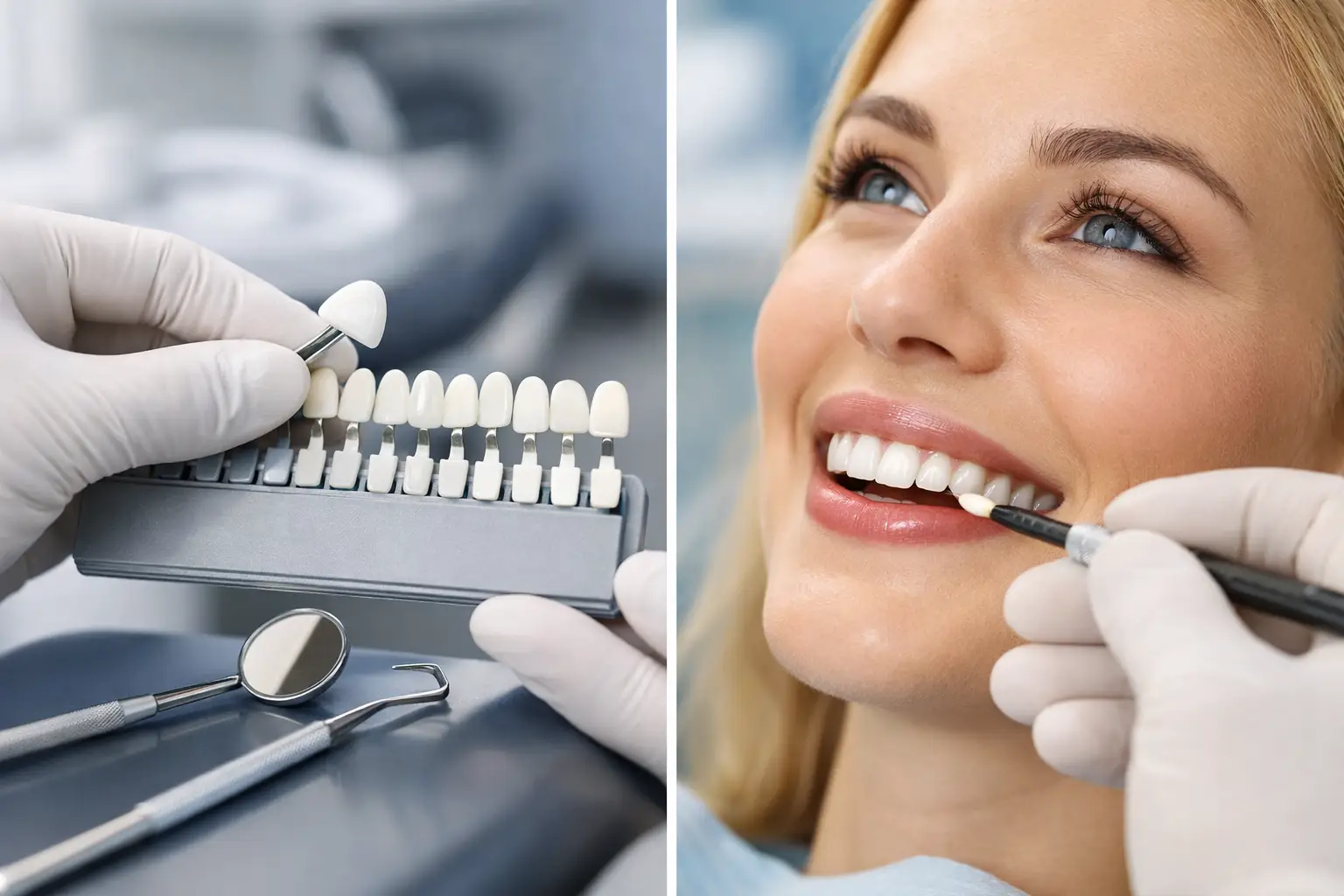
Veneers are thin custom shells, most often made from porcelain, that cover the front surface of a tooth. They are created to match the shape, shade, and proportions of your smile. Porcelain veneers are commonly chosen when several front teeth need a more consistent change in colour, shape, length, or alignment.
The difference is not simply resin versus porcelain. Bonding is usually a more conservative treatment because it often requires little or no removal of natural tooth structure. Veneers may require a small amount of enamel preparation so the final result sits naturally against the neighbouring teeth and gums. The right approach depends on the condition and position of each tooth.
When Dental Bonding May Be the Better Fit
Bonding can be an excellent choice when the concern is focused and the surrounding tooth structure is healthy. For example, it may be appropriate for a chipped corner after an accident, a worn edge, a small gap between teeth, or slight shape differences that make a smile feel uneven.
One of bonding’s biggest advantages is flexibility. If the resin chips or becomes worn, it can often be repaired or added to without replacing an entire restoration. It is also generally less costly upfront than porcelain veneers, which can make it a sensible first step for patients who want a conservative cosmetic improvement.
The trade-off is that composite resin is not as hard or stain-resistant as porcelain. Coffee, tea, red wine, tobacco, and strongly coloured foods may gradually affect its appearance. Bonded teeth can also be more likely to chip if you bite nails, chew ice, open packages with your teeth, or clench and grind at night.
For many patients, this does not make bonding a lesser choice. It simply means the treatment should match the job it needs to do. A small repair on a low-pressure area may perform beautifully for years with good care. Larger bonding changes on front teeth that receive heavy biting forces may need more frequent maintenance.
When Veneers May Be the Better Fit
Veneers are often considered when the desired result involves more than one small correction. They can help create consistency across several visible teeth where colour, shape, minor spacing, or surface texture are concerns. Porcelain reflects light in a way that closely resembles natural enamel, which can give a refined and lifelike result.
Porcelain is also highly resistant to staining. This can be especially appealing when teeth have deep internal discolouration or when a patient wants a stable, bright shade that will not change as readily over time. With thoughtful planning and daily care, veneers can be a durable option for enhancing a smile.
That durability comes with a larger commitment. Once enamel is removed to make room for a veneer, the tooth will generally need a veneer or another restoration in the future. Veneers can also chip, loosen, or fracture, particularly when they are exposed to repeated grinding or biting on hard objects. They are strong, but they are not indestructible.
A veneer is also only as healthy as the tooth and gums supporting it. Active gum inflammation, untreated decay, or unstable bite forces should be addressed before cosmetic treatment begins. A beautiful result should never come at the expense of a healthy foundation.
Appearance, Timing, and Tooth Preparation
Both treatments can look very natural when they are planned carefully. The most successful cosmetic dentistry does not make every tooth look identical. Instead, it considers facial features, lip line, tooth proportions, gum contours, and the subtle variation found in a natural smile.
Bonding is typically completed in one visit. Your dentist selects and layers composite shades, then shapes and polishes the material directly on the tooth. This allows for immediate changes and can be particularly helpful when a patient needs a quick repair before an event or wants to test a subtle adjustment in tooth shape.
Veneers usually take more than one appointment. After planning and any needed tooth preparation, impressions or digital scans are used to create the custom veneers. Temporary veneers may be placed while the final restorations are being made, depending on the treatment plan. At the final visit, each veneer is checked for fit, colour, comfort, and bite before being bonded in place.
The amount of preparation varies. Some veneer cases require only minimal enamel adjustment, while others need more space to correct a prominent tooth or create balanced proportions. Be cautious of any approach that promises the same treatment for every smile. Your teeth deserve a plan based on their individual needs.
Cost Is Part of the Conversation, Not the Whole Decision
Bonding generally has a lower initial cost because it uses less laboratory work and can often be completed in one appointment. Veneers usually cost more per tooth due to the custom design, materials, and laboratory fabrication involved. Exact fees depend on the number of teeth being treated, the complexity of the case, and whether additional care is needed first.
Looking only at the first appointment can be misleading. Bonding may need polishing, repair, or replacement over time, while veneers may offer longer-lasting colour stability but will eventually need replacement as well. The better value is the option that addresses your concern conservatively, functions comfortably, and fits the level of maintenance you are prepared to provide.
If you are considering changing multiple teeth, it can also help to discuss whether whitening, orthodontic treatment such as Invisalign, reshaping, or a combination of treatments could achieve part of your goal. Sometimes the most conservative plan is not the most obvious one.
Caring for Bonding and Veneers
The daily routine for both treatments is reassuringly familiar: brush twice a day with a non-abrasive toothpaste, clean between teeth daily, and attend regular checkups and hygiene appointments. Healthy gums help cosmetic work look its best and last longer.
Avoid using your teeth as tools, and take care with very hard foods. If you clench or grind your teeth, a custom night guard may help protect both natural teeth and cosmetic restorations. Regular professional polishing can keep bonding smooth, while your dental team can monitor the edges of veneers and the health of the teeth underneath.
It is also wise to address discomfort early. A rough edge, change in bite, sensitivity, or a new chip is easier to manage when it is assessed promptly.
Choosing a Treatment That Still Feels Right Years From Now
The best cosmetic result should feel like your smile, only more comfortable and confident. At Victoria Park Dental, treatment planning begins with listening to what you would like to change, then examining your teeth, gums, bite, and overall oral health before recommending an option.
If you want a modest repair with minimal alteration to your tooth, bonding may be the right path. If you are seeking a more comprehensive, stain-resistant change across several front teeth, veneers may be worth considering. A careful conversation can help you choose a result that looks natural now and supports a healthy smile for years to come.