
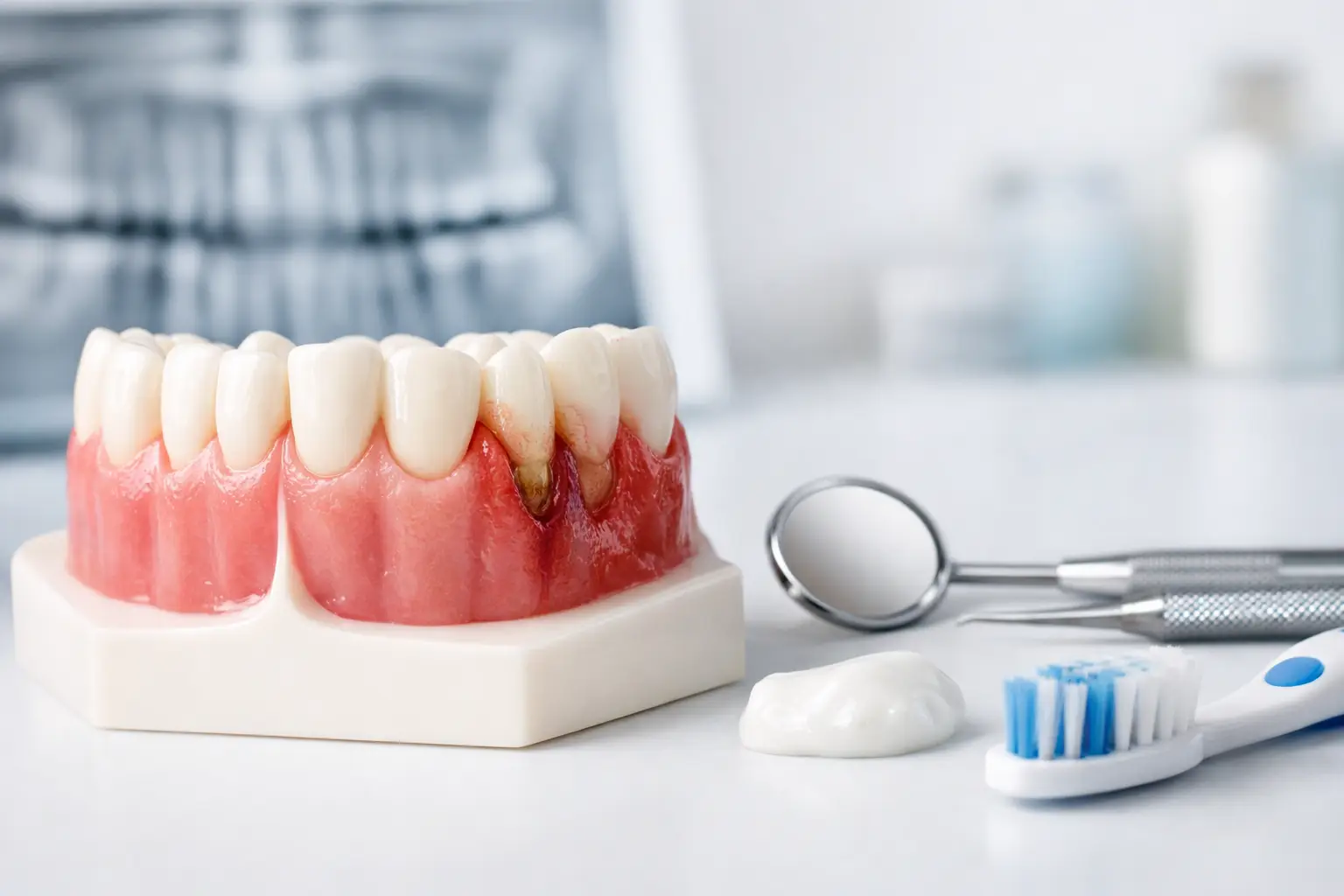
Bleeding when you brush can be easy to brush off, especially if it only happens once in a while. But that small sign is often your gums asking for attention. This complete guide to gum disease explains what gum disease is, how it starts, what symptoms to watch for, and what you can do to protect your long-term oral health.
What gum disease actually is
Gum disease is an infection and inflammation of the tissues that support your teeth. It usually begins when plaque, a sticky film of bacteria, builds up along the gumline. If plaque is not removed thoroughly with brushing, flossing, and regular professional cleanings, it can harden into tartar, which is much harder to remove at home.
In its earliest stage, gum disease is called gingivitis. At this point, the gums may look red or puffy and may bleed during brushing or flossing. Gingivitis is common, and the good news is that it is usually reversible with early care.
If it is left untreated, gingivitis can progress to periodontitis. This is a more advanced form of gum disease that affects not just the gums, but also the bone and connective tissues that hold teeth in place. Over time, this can lead to gum recession, loose teeth, and tooth loss.
A complete guide to gum disease stages
Understanding the stages helps explain why early treatment matters so much. Gum disease does not usually become serious overnight. It tends to develop gradually, which means there is often a valuable window for prevention.
Gingivitis
This is the mildest stage. The gums may bleed, feel tender, or appear swollen, but the supporting bone is still intact. Many people have gingivitis without significant pain, which is one reason it can go unnoticed.
Early periodontitis
At this stage, inflammation has started to affect the structures beneath the gums. Small pockets can form between the teeth and gums, creating spaces where bacteria collect more easily. Some early bone loss may begin.
Moderate to advanced periodontitis
As the condition progresses, the pockets deepen, bone loss continues, and the gums may recede. Teeth can become more sensitive, shift position, or feel loose. Treatment is still possible, but it is typically more involved than treating gingivitis.
Common signs and symptoms
Gum disease is often quieter than people expect. It does not always cause sharp pain, especially early on. That is why paying attention to small changes can make a real difference.
Common signs include bleeding when brushing or flossing, red or swollen gums, persistent bad breath, tenderness, gum recession, sensitivity near the gumline, and teeth that feel loose or seem to be moving. Some people also notice that their bite feels a little different or that spaces between teeth have changed.
It depends on the person, though. Some patients have visible symptoms, while others only learn there is a problem during a routine exam and hygiene appointment.
Why gum disease happens
The main cause is plaque buildup, but several factors can increase your risk or make the condition more difficult to control. Inconsistent oral hygiene is one of the most common reasons. Smoking or vaping can also have a major effect, as tobacco products reduce blood flow to the gums and can hide early warning signs such as bleeding.
Health conditions matter too. Diabetes, hormonal changes, dry mouth, certain medications, stress, and a weakened immune response can all play a role. Genetics can also influence how susceptible someone is to periodontal disease, even if they are doing many things right at home.
This is why treatment and prevention should never feel one-size-fits-all. Two people can have similar habits but very different gum health.
How dentists diagnose gum disease
A proper diagnosis involves more than a quick look at the gums. Your dentist or hygienist will usually assess the colour and condition of the gum tissue, check for bleeding, measure the depth of the spaces between the teeth and gums, and evaluate whether there are signs of recession or tooth mobility.
X-rays are often used to look at the bone supporting the teeth. This helps show whether gum disease is limited to the surface tissues or whether it has started to affect deeper structures.
These details matter because they guide the treatment plan. Mild gingivitis may respond well to improved home care and a professional cleaning. More advanced periodontitis may require deeper cleaning below the gumline and closer monitoring over time.
Treatment options for gum disease
Treatment depends on how far the disease has progressed. The earlier it is caught, the simpler and more comfortable treatment tends to be.
For gingivitis, a professional cleaning combined with better brushing and flossing habits is often enough to reverse the problem. Your dental team may also recommend changes to technique, tools, or products to make home care more effective.
For periodontitis, treatment usually focuses on removing bacteria and tartar from below the gumline. This is often done through scaling and root planing, sometimes called deep cleaning. The goal is to reduce inflammation, help the gums heal, and make it harder for bacteria to collect in deep pockets.
In some cases, antimicrobial therapy may be recommended. In more advanced situations, referral for periodontal treatment may be needed if surgery or specialized care is the best next step. The right plan depends on the severity of the disease, your medical history, and how your gums respond over time.
What treatment feels like for patients
Many people delay care because they worry treatment will be uncomfortable or overwhelming. That concern is understandable, especially if they have had a difficult dental experience in the past.
In reality, gum disease treatment is often much more manageable than people expect. Modern dental care is designed to be gentle, clear, and personalized. Numbing options, thoughtful pacing, and a step-by-step explanation can make a big difference in comfort.
There is also a practical trade-off to keep in mind. Early treatment is usually simpler and less invasive. Waiting often means more appointments, more tissue damage, and more complex care later.
How to prevent gum disease at home
Prevention is one of the best investments you can make in your oral health. Daily habits matter, and consistency matters more than perfection.
Brush twice a day with a soft-bristled toothbrush and fluoride toothpaste. Clean between your teeth once a day with floss or another interdental tool recommended by your dental team. If plaque tends to build up quickly for you, small technique changes can have a big impact.
It also helps to stay current with dental exams and professional cleanings. Even strong home care cannot remove tartar once it has hardened. Regular visits give your dental team a chance to spot early changes before they become harder to treat.
Lifestyle choices matter too. Limiting tobacco use, managing conditions like diabetes, staying hydrated, and paying attention to dry mouth can all support healthier gums.
Gum disease and your overall health
Your gums are not separate from the rest of your body. Ongoing inflammation in the mouth can affect overall wellness, and certain systemic conditions can make gum problems worse.
There is a well-established relationship between gum disease and diabetes, for example. People with diabetes may have a higher risk of periodontal disease, and untreated gum inflammation can make blood sugar control more difficult. Pregnancy, heart health concerns, and immune conditions can also make gum care especially important.
That does not mean every case of gum disease becomes a larger health issue. It does mean that taking gum symptoms seriously is about more than protecting your smile alone.
When to book an appointment
If your gums bleed regularly, look swollen, feel sore, or seem to be pulling away from your teeth, it is worth booking an appointment. The same goes for chronic bad breath, new tooth sensitivity near the gums, or teeth that feel loose.
Even if the symptoms seem mild, a professional assessment can give you clarity. Sometimes the fix is straightforward. Sometimes you need a more tailored plan. Either way, knowing where things stand is better than guessing.
At a patient-focused clinic such as Victoria Park Dental, the goal is not to make treatment feel intimidating. It is to understand what is happening, explain your options clearly, and help you move toward healthier gums in a way that feels manageable.
Healthy gums rarely get much attention until something feels off. That is understandable. But small signs are worth listening to, because early action can protect not just your gums, but the comfort, function, and confidence of your smile for years to come.