
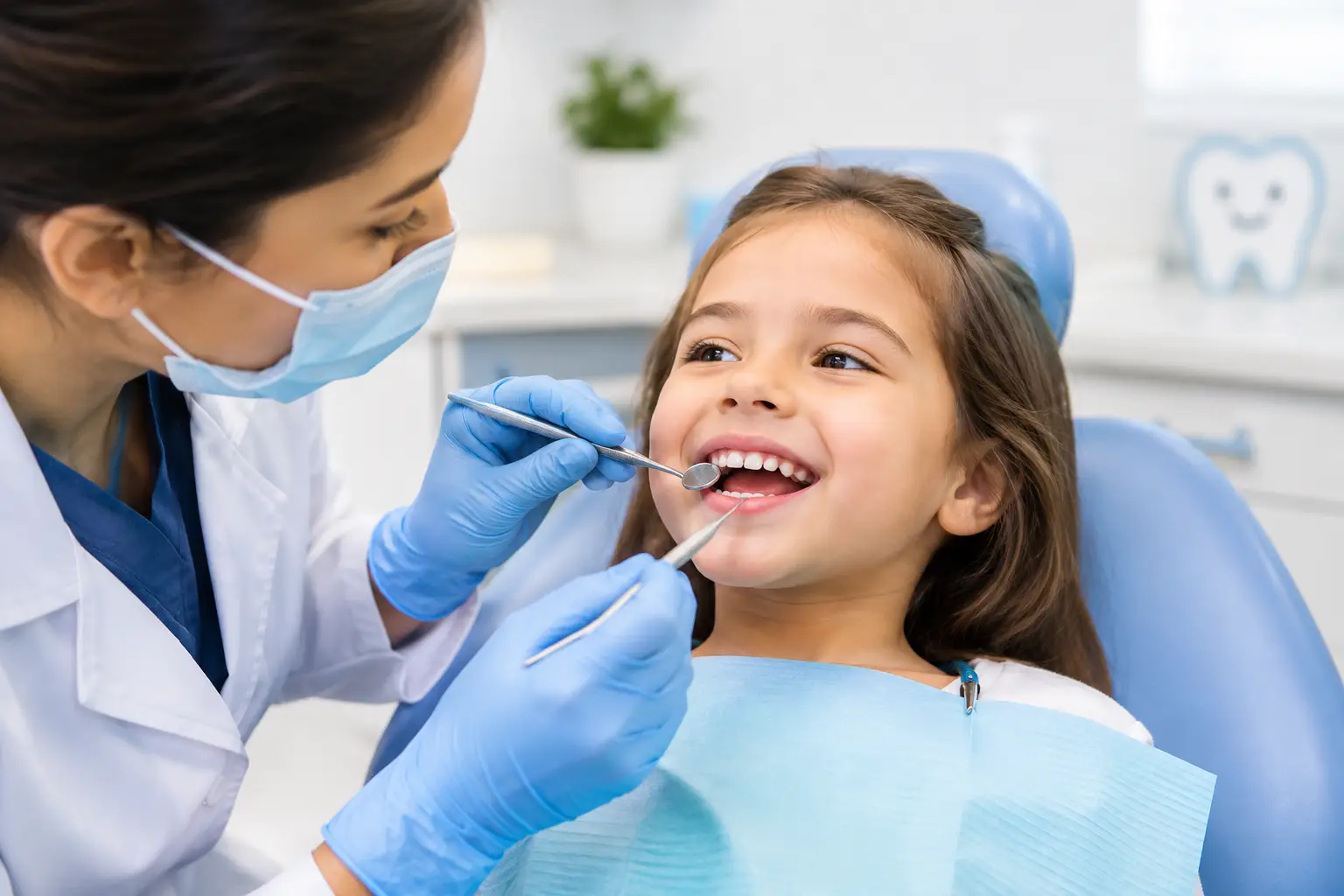
A child’s first dental visits can shape how they feel about oral health for years to come. Pediatric dentistry is not simply adult dental care in a smaller chair. It is thoughtful, age-appropriate care that helps children feel safe, supports developing teeth and jaws, and gives parents practical guidance they can use at home.
For many families, the goal is simple: help children grow up seeing dental visits as a normal, comfortable part of staying healthy. Starting early and attending regularly makes that goal much easier to achieve.
When should children first see a dentist?
A first visit is generally recommended by a child’s first birthday or within six months of the first tooth appearing. This may feel early, especially when only one or two small teeth are visible, but those first teeth can develop decay. Early appointments also give the dental team an opportunity to check growth, review feeding and brushing routines, and answer questions before a concern becomes more complicated.
The first appointment is often gentle and brief. Depending on a child’s age and comfort level, it may include an examination of the teeth, gums, bite, and soft tissues of the mouth. Parents can expect a conversation about home care, fluoride, diet, thumb or finger sucking, and what to watch for as new teeth erupt.
Some children happily sit in the chair right away. Others need time to observe, sit with a parent, or take one small step at a time. Both responses are completely normal. A positive experience matters more than rushing through every part of a visit.
What pediatric dentistry looks for as your child grows
Children’s mouths change quickly. Regular checkups allow a dentist to monitor those changes and offer advice that fits the child in front of them, rather than relying on a one-size-fits-all plan.
In the early years, the focus is often on preventing tooth decay, establishing a brushing routine, and checking that primary teeth are erupting as expected. Baby teeth deserve careful attention. They help children chew, speak clearly, and hold space for permanent teeth. If a primary tooth is lost too early due to decay or injury, neighbouring teeth can shift and affect the path of the adult tooth below.
As children get older, appointments may include monitoring bite development, crowding, eruption patterns, and habits such as prolonged thumb sucking. A dentist may also discuss protective options such as sealants for back teeth. Sealants are thin coatings placed in the grooves of molars, where food and bacteria can be difficult to remove even with good brushing.
Digital X-rays may be recommended when they would provide information that cannot be seen during an examination, such as decay between teeth or the position of developing permanent teeth. They are not automatically needed at every visit. The timing depends on a child’s age, dental history, risk of decay, and what the clinical examination shows.
Prevention is more comfortable than repair
Tooth decay remains one of the most common childhood health concerns, but much of it can be prevented. Cavities may begin without obvious pain, especially between teeth. By the time a child says a tooth hurts, treatment can be more involved than it would have been at an earlier stage.
Preventive visits give families the chance to identify small changes early. Professional cleanings, fluoride recommendations when appropriate, and practical coaching can help protect teeth before decay takes hold. This conservative approach supports comfort now and helps preserve healthy tooth structure for the future.
Building strong habits at home
Good dental care is built in small daily moments. For infants, parents can gently wipe the gums after feedings and begin brushing as soon as the first tooth appears. Use a soft, age-appropriate toothbrush and a tiny smear of fluoride toothpaste for children under three. For children aged three to six, use a pea-sized amount and encourage them to spit out the toothpaste rather than swallow it.
Children usually need hands-on help with brushing longer than parents expect. Many do not have the coordination to brush thoroughly on their own until about age eight, and some need supervision beyond that. Letting a child take a turn is a great way to build independence, but an adult “finish brush” helps ensure the gumline and back teeth are clean.
Flossing becomes important once teeth touch each other. A parent can help with a floss pick or traditional floss, choosing whichever method makes the routine more likely to happen consistently. The best tools are the ones your family can use gently and regularly.
Food and drink choices also play a meaningful role. Frequent sipping on juice, sweetened drinks, sports beverages, or flavoured milk exposes teeth to sugar repeatedly throughout the day. Water is the best everyday drink between meals. Treats do not have to be forbidden, but having them with a meal rather than grazing on them over several hours is kinder to teeth.
Helping children feel comfortable at the dentist
Children notice how adults talk about dental visits. A calm, matter-of-fact approach can make a real difference. Instead of promising that a visit will never feel strange or uncomfortable, try explaining that the dental team will count teeth, take pictures when needed, and show them how to keep their smile strong.
Avoid using dental appointments as a consequence for eating sweets or skipping brushing. It can unintentionally make the dentist seem frightening. If your child has questions, answer honestly in simple language, then let the dental team explain the rest in child-friendly terms.
A morning appointment may be easier for younger children, who are often more rested and patient earlier in the day. Bringing a familiar comfort item can help too. If your child has had a difficult medical or dental experience, sensory sensitivities, or high anxiety, share that information before the visit. Personalized care begins with understanding what will help a child feel more secure.
Common concerns parents should not ignore
Call a dental office if your child has ongoing tooth pain, swelling, a chipped or broken tooth, a knocked-out permanent tooth, bleeding that does not stop, or a sore in the mouth that does not heal. Dental injuries can happen during play, sports, or everyday childhood tumbles, and prompt assessment can affect the outcome.
For active children, a custom sports mouthguard can provide valuable protection for teeth, lips, and jaws. Store-bought options may offer some protection, but they can be bulky or loose. A professionally fitted mouthguard is designed for comfort and stability, making it more likely a child will actually wear it.
Parents should also mention snoring, mouth breathing, frequent jaw discomfort, or difficulty chewing. These concerns are not always caused by dental problems, but they are worth discussing as part of a child’s overall oral development.
A partnership that grows with your family
The most effective pediatric dental care is a partnership between parents, children, and a dental team that takes time to listen. Every child has a different temperament, risk level, routine, and pace of development. One child may need extra encouragement with brushing, while another may benefit from early monitoring of crowded teeth or additional protection against cavities.
At Victoria Park Dental, we believe preventive care should feel clear, calm, and personalized. Families deserve straightforward explanations and options that support long-term oral health without making dental care feel intimidating.
A healthy smile does not begin with perfect brushing or a fearless first appointment. It begins with steady support, small routines, and a dental home where your child can feel known as they grow.