
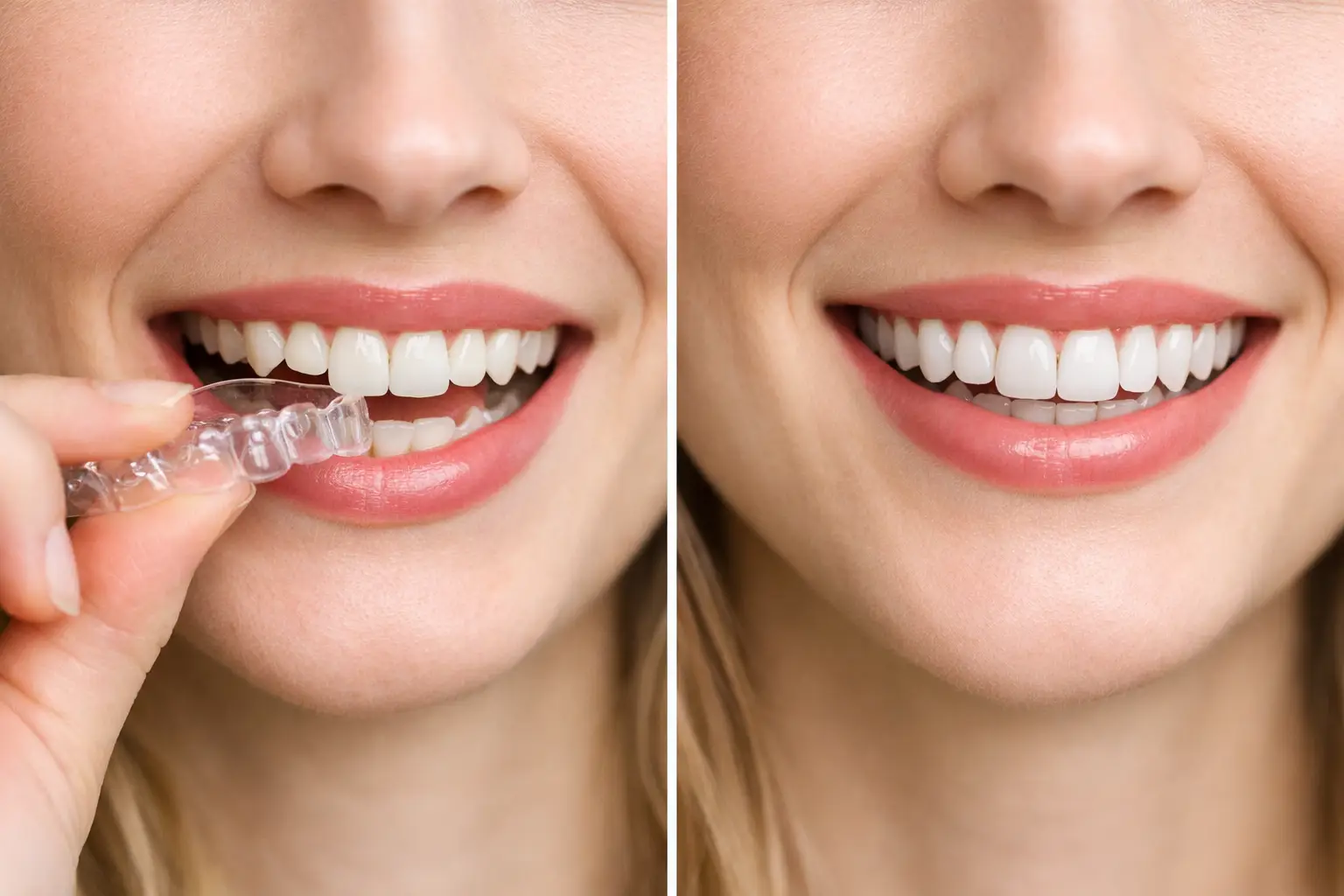
A before and after Invisalign comparison can be exciting to see, especially when you have spent years feeling self-conscious about crowded, spaced, or uneven teeth. But the most meaningful change is not always captured in a single photo. A successful result should support a comfortable bite, healthy gums, easier cleaning, and confidence in the way your smile feels every day.
At Victoria Park Dental, Invisalign treatment is planned around the individual. Your starting point, oral health, bite, and goals all matter. That means your own result may look very different from someone else’s – and that is exactly how it should be.
What You May Notice Before Invisalign
People consider Invisalign for many reasons. Some have teeth that overlap or twist, which can make brushing and flossing more difficult. Others have visible gaps, a tooth that sits outside the arch, or an old orthodontic result that has gradually shifted over time. For many adults, the decision is also about having a more discreet treatment option that fits work, family life, and social commitments.
Before treatment begins, a dental assessment is essential. Clear aligners move teeth by applying gentle, planned pressure, but they are not a substitute for treating active dental problems. Cavities, gum inflammation, significant bone loss, or an unstable bite may need attention first. Beginning with a healthy foundation helps protect your long-term result.
Your dentist will also look beyond whether teeth appear straight from the front. The way your upper and lower teeth meet affects chewing, wear patterns, jaw comfort, and how stable the final alignment may be. A smile can look more even while still needing careful bite planning, which is why personalized assessment matters.
Before and After Invisalign: What Changes Over Time
The first changes are often subtle. You may notice a small gap closing, a rotated tooth beginning to turn, or the edges of the front teeth lining up more evenly. These early changes can be encouraging, but teeth do not always move in a perfectly straight line from day one. Some areas may appear unchanged for several weeks while other movements take place first.
As treatment progresses, many patients see a more balanced smile take shape. Crowded teeth may become easier to brush between. Spaces can be reduced or redistributed as planned. Teeth that previously looked uneven in photos may sit more harmoniously within the smile.
The final before and after Invisalign result can also include details that are easy to overlook at first. Teeth may be positioned to improve how they bite together, make room for a restoration, or create a more even gumline appearance. In some cases, cosmetic finishing such as whitening or bonding may be discussed after orthodontic treatment, once the teeth are in their intended positions.
It is helpful to remember that “after” does not mean identical to a digitally simulated image. Treatment planning software is valuable for visualizing possible tooth movement, but biological responses vary. Your dentist monitors progress and may recommend refinements if certain teeth need additional movement to reach the desired result.
Changes that clear aligners may not make
Invisalign can move teeth, but it does not change the colour, shape, enamel texture, or size of teeth. If discoloration, chipped edges, worn enamel, or uneven tooth proportions are part of your concern, these can be considered separately once alignment is complete.
Clear aligners may also not be the best choice for every orthodontic need. More complex bite corrections, significant jaw discrepancies, or certain tooth movements can require additional techniques or a different orthodontic approach. A clear recommendation should include an honest conversation about what is predictable for your situation.
What Determines Your Invisalign Result?
A great result depends on more than the aligners themselves. Your treatment plan, oral health, daily habits, and follow-up appointments all contribute to the outcome.
Wearing aligners for the prescribed amount of time is one of the biggest factors. They are typically removed for eating, drinking anything other than water, and brushing and flossing. The benefit is flexibility, but that flexibility comes with responsibility. Frequently leaving aligners out can slow movement and affect whether trays continue to fit properly.
Attachments are another part of many treatment plans. These small, tooth-coloured shapes are bonded temporarily to selected teeth and give aligners a better grip for precise movements. Although they may be visible at close range, they are often an important reason clear aligners can achieve more than simple straightening.
Regular appointments allow your dental team to check that your teeth are tracking as expected, review hygiene, and address concerns early. Aligners should feel snug when you begin a new set, but ongoing sharp pain, an aligner that will not seat, or gum irritation should be brought to your dentist’s attention.
The Everyday Experience During Treatment
Most patients adjust quickly to wearing clear aligners, though the first few days with a new tray can bring pressure or tenderness. This is generally a sign that the aligner is active, not a reason to push through significant discomfort without asking for advice.
Good oral hygiene becomes even more important during treatment. Food and plaque can become trapped if aligners are placed back over teeth that have not been cleaned. Brushing after meals when possible, flossing consistently, and cleaning the aligners as instructed helps keep teeth and gums healthy throughout the process.
There are practical trade-offs. Clear aligners are removable, but they require planning when dining out, snacking often, or travelling. They should be stored in their case, not wrapped in a napkin, and kept away from hot water that could warp the plastic. For patients who can commit to the wear schedule, the convenience and discreet appearance can be a strong fit.
Why Retainers Matter After the “After” Photo
The final aligner is not the finish line for your smile. Teeth naturally have a tendency to shift throughout life, particularly after orthodontic treatment. Retainers hold teeth in their new positions while surrounding tissues adapt and help protect the time and care invested in treatment.
Your dentist will recommend a retainer plan suited to your needs. Many patients move to nighttime wear after an initial period, but the exact schedule can vary. Keeping retainers clean, storing them safely, and bringing them to checkups if there are concerns are simple habits with long-term value.
If a retainer no longer fits, do not force it into place. Contact your dental team promptly. Addressing minor changes early may be simpler than waiting until teeth have shifted more noticeably.
Setting Realistic Expectations for Your Smile
Before-and-after photos can show what is possible, but they should be viewed as examples rather than promises. The most useful question is not, “Can my smile look exactly like that?” It is, “What is a healthy, realistic improvement for my teeth and bite?”
A thoughtful consultation gives you room to ask about timing, attachments, refinements, retainers, costs, and any treatment alternatives. It should also address the health of your gums and teeth, not only the appearance of the front six teeth.
The best Invisalign result is one that feels like your own smile, only healthier, easier to care for, and more comfortable to share. If you are considering treatment, start with a conversation that looks at the whole picture and gives your smile the patient, personalized attention it deserves.