
A tooth that wakes you at night, hurts when you bite, or has become badly damaged can make every meal feel like a decision you would rather not make. When discussing a root canal versus extraction, the right choice is rarely about simply removing pain today. It is about protecting your comfort, function, and oral health for the years ahead.
At Victoria Park Dental, we take time to understand what is happening with your tooth and what matters most to you. In many cases, saving a natural tooth is the preferred approach. But there are situations where removing it is the healthier, more predictable option. A thorough examination, digital imaging, and a clear conversation can help make that decision feel far less overwhelming.
Root Canal Versus Extraction: The Main Difference
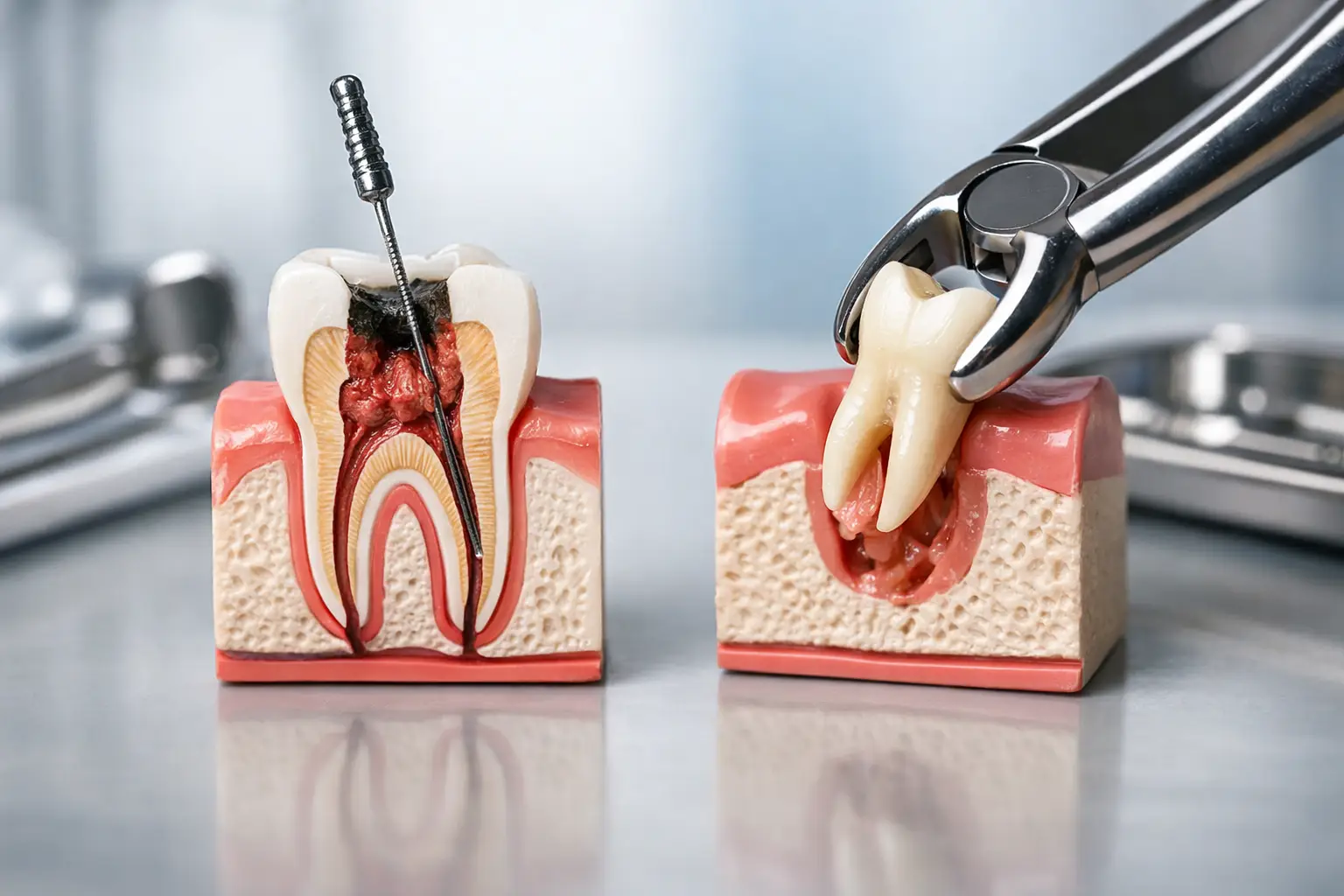
A root canal treatment is designed to save a tooth whose inner pulp has become inflamed or infected. The pulp contains nerves and blood vessels. It can be affected by deep decay, a crack, repeated dental work, or trauma. During treatment, the infected tissue is carefully removed, the inside of the tooth is cleaned and disinfected, and the space is sealed. The tooth is then usually protected with a filling or crown.
An extraction removes the entire tooth, including its roots. This may be recommended when the tooth cannot be restored safely, has severe gum disease, is extensively cracked, or has lost too much supporting bone. Removing the source of infection can provide relief, but it also creates a space that may need a plan for replacement.
Both treatments can be appropriate. The key question is not which option sounds easier at first. It is whether the tooth has a good long-term prognosis and whether restoring it supports your overall oral health.
When Saving the Tooth May Be the Better Choice
When a tooth can be predictably restored, a root canal often offers significant advantages. Your natural tooth is already positioned to work with your bite, support nearby teeth, and help you chew comfortably. Keeping it avoids the changes that can follow tooth loss.
After an extraction, neighbouring teeth can gradually drift into the open space. The opposing tooth may also move because it no longer has a tooth to bite against. Over time, these changes can affect your bite and make cleaning more difficult. Bone in the area of the missing tooth can also shrink because it is no longer being stimulated by a tooth root.
A root canal is not the same as leaving an infection untreated. It is an active treatment that removes the infected pulp while preserving the outer structure of the tooth. With a well-fitting restoration and regular care, many root canal-treated teeth can function comfortably for many years.
This option may be especially suitable when the tooth has enough healthy structure remaining, the roots are stable, and the gum and bone support are strong. A crown is commonly recommended for back teeth after root canal treatment because molars and premolars handle substantial chewing pressure. Modern restorations, including CEREC same-day crowns when appropriate, can help protect the tooth efficiently and naturally.
When Extraction May Be the Healthier Decision
There are times when saving a tooth would require extensive treatment without offering a reliable outcome. In these situations, extraction can be the more conservative choice for your long-term health.
For example, a tooth may be too fractured below the gumline to support a crown. Severe decay may have left too little healthy tooth structure. Advanced periodontal disease can reduce bone support to the point where the tooth is loose. Some infections or root fractures are also difficult to treat predictably.
An extraction may also be advised for certain wisdom teeth that are impacted, repeatedly infected, damaging nearby teeth, or difficult to keep clean. The goal is not to remove teeth unnecessarily. It is to avoid investing time and treatment in a tooth that is unlikely to remain healthy or comfortable.
If a visible tooth or chewing tooth is extracted, replacement options should be part of the conversation. Depending on your needs, these may include a dental implant, bridge, or removable partial denture. Not every missing tooth needs the same solution, but leaving a space without discussing the consequences can lead to avoidable changes later.
What Treatment Feels Like
Many patients worry that root canal treatment will be painful. In reality, the discomfort people associate with a root canal often comes from the infection before treatment, not the procedure itself. Local anesthetic is used to keep you comfortable, and treatment is planned carefully around the tooth and your needs.
It is normal to have some tenderness for a few days afterward, particularly when biting. This usually improves as the area heals. If pain becomes severe, swelling develops, or symptoms do not improve, your dental team should assess it promptly.
Extractions are also completed with local anesthetic, and comfort is a priority throughout the appointment. Recovery can involve swelling, tenderness, and a temporary change in eating habits. Following aftercare instructions matters: protect the blood clot, avoid smoking, and choose softer foods while the site heals. Your dentist will explain the specific guidance for your procedure.
Comparing Cost and Long-Term Value
The immediate cost of extraction can appear lower than root canal treatment followed by a crown. However, that comparison does not always reflect the full picture. If the missing tooth needs to be replaced, the total cost can increase, particularly with an implant-supported restoration.
A root canal may involve several parts of care: the treatment itself, a core restoration, and often a crown. The value is in retaining a natural tooth that can continue to function in your smile. An extraction may be more cost-effective when the tooth has a poor prognosis, but it is worth considering the cost and timing of replacement at the same time.
Dental plans vary widely in British Columbia. Before treatment begins, a clear estimate can help you understand coverage, out-of-pocket costs, and how different treatment phases may fit your budget. Decisions about dental care should never be rushed solely because one option seems less expensive at the first appointment.
Factors Your Dentist Will Assess
Choosing between treatment options requires more than looking at an X-ray. Your dentist will consider the health of the pulp, the amount of remaining tooth structure, the condition of the roots, and the surrounding gum and bone. They will also evaluate your bite, existing restorations, and whether you have symptoms such as swelling or sensitivity.
Your own goals matter, too. Some patients want to preserve every possible natural tooth. Others may prefer a replacement plan if a tooth has already needed repeated repairs. There is no one-size-fits-all answer, especially when a tooth sits in a highly visible area or does most of your chewing.
If the case is complex, referral to an endodontist may be recommended. Endodontists focus on diagnosing and treating conditions inside the tooth and can provide additional insight when root canal treatment is being considered.
Questions Worth Asking Before You Decide
A good treatment discussion should leave you with practical answers. Ask whether the tooth can be restored predictably, how long the restoration is expected to last, and what could happen if you wait. It is also helpful to ask whether a crown will be needed after a root canal, what replacement options exist after extraction, and how each path could affect neighbouring teeth.
If infection is present, delaying care can allow pain, swelling, and damage to worsen. Dental infections do not reliably resolve on their own. Contact your dentist promptly if you have facial swelling, fever, difficulty swallowing, or trouble breathing, as these symptoms require urgent assessment.
The best decision is the one that respects the biology of your tooth and supports a healthy, comfortable smile. Whether that means preserving a restorable tooth or planning a thoughtful replacement, you deserve clear guidance and care that looks beyond the immediate problem.